From idea to market-ready product, our NPI solutions make every stage easier, faster. Discover How We Help

Views: 222 Author: Tomorrow Publish Time: 2026-01-21 Origin: Site


Content Menu
● What Is CNC Aluminium Casting Machining?
● Step-by-Step Process of CNC Aluminium Casting Machining
>> 1. Product Design and CAD Modeling
>> 2. Mold Creation and Casting Process
>> 3. CNC Machining: Precision Finishing
>> 4. Surface Treatment and Post-Machining Finishing
>> 5. Dimensional Inspection and Quality Control
● Key Advantages of CNC Aluminium Casting Machining
● Common CNC Machines in Aluminium Casting Applications
● Selecting the Right Aluminium Alloy for CNC Machining
● Industrial Applications of CNC Aluminium Casting Machining
● Challenges Manufacturers Face in CNC Aluminium Casting Machining
● Maintenance and Sustainability Considerations
● Future Trends in CNC Aluminium Casting Machining
● FAQ
>> 1. What is the main advantage of CNC Aluminium Casting Machining?
>> 2. How does CNC Machining improve aluminium cast parts?
>> 3. Which industries rely on CNC Aluminium Casting Machining the most?
>> 4. Can CNC Aluminium Casting Machining support small-batch production?
>> 5. What are future innovations shaping CNC Aluminium Casting Machining?
CNC Aluminium Casting Machining is an advanced manufacturing process that combines the efficiency of aluminium casting with the precision of CNC Machining to produce high-quality, durable, and lightweight metal components. This method has become increasingly essential across multiple industries, including automotive, aerospace, medical devices, and industrial machinery.
Understanding how CNC Aluminium Casting Machining works is crucial for engineers and manufacturers who aim to produce components with highly accurate dimensions, excellent surface quality, and consistent performance. The process integrates the flexibility of casting with the cutting efficiency of CNC Machining, making it a foundation of modern metalworking.

CNC Aluminium Casting Machining refers to a hybrid manufacturing method that involves forming components through aluminium casting and refining them using computer-controlled machining. This process begins with melting aluminium and pouring it into custom molds to shape the raw castings. Once solidified, the castings are precisely machined using CNC equipment to achieve final tolerances and geometry.
The technique provides a cost-effective yet precise method for creating components that require both structural integrity and meticulous detailing. The result is a finished product capable of meeting even the most demanding engineering standards, blending the best of both worlds—casting efficiency and CNC Machining accuracy.
The success of CNC Aluminium Casting Machining begins with a meticulous design phase. Engineers create detailed 3D CAD models to define part geometry, tolerances, machining allowances, and critical surfaces. These digital models act as the blueprint for both the casting and machining processes.
Once finalized, the CAD file is converted into a CAM (Computer-Aided Manufacturing) program that directs CNC machines in executing precise toolpaths. This ensures the final component matches the original virtual model with near-perfect accuracy.
Next, molds are crafted based on the design specifications. Depending on the production volume and application, manufacturers can choose among different casting methods:
- Die casting – Ideal for high-volume production of intricate, thin-walled parts.
- Sand casting – Best suited for large or complex shapes where cost efficiency is vital.
- Investment casting – Delivers fine details and smooth surfaces for small, precision parts.
- Permanent mold casting – Used for medium-volume production requiring repeatability.
The aluminium alloy is melted to around 660°C and poured into the molds. Once the metal solidifies, the casting is ejected and allowed to cool. The resulting part, although close to the final shape, typically contains imperfections and requires CNC Machining for finishing.
This phase is the heart of the CNC Aluminium Casting Machining process. Using multi-axis CNC Machining centers, skilled operators or automation systems remove excess material to achieve final dimensional accuracy. The most common CNC Machining operations are:
- Milling: Creating flat or contoured surfaces with multiple rotating tools.
- Turning: Shaping round components like shafts or housings on CNC lathes.
- Drilling and boring: Forming precise holes and internal cavities.
- Threading and tapping: Producing internal and external threads.
During machining, continuous coolant flow prevents heat distortion, and advanced carbide or diamond-coated tools ensure superior surface finishes. The CNC machine follows pre-programmed instructions, guaranteeing repeatable results even in large batch production.
After CNC Machining, surface treatment steps are applied to improve durability, aesthetics, and functionality. Popular finishing methods include:
- Anodizing: Forms a dense oxide layer protecting aluminium from corrosion.
- Powder coating: Provides color uniformity and additional surface hardness.
- Sandblasting and polishing: Create smooth textures and remove tool marks.
- Electroplating: Adds another layer of protection or conductivity.
Such finishing operations elevate both performance and appearance, allowing manufacturers to meet industry-specific requirements such as aerospace-grade smoothness or medical instrumentation precision.
Once all CNC Machining operations are complete, rigorous quality checks are performed. Techniques include:
- CMM (Coordinate Measuring Machines) for 3D dimensional verification.
- Laser scanning to compare actual geometry with CAD models.
- Ultrasonic and X-ray testing to detect internal defects in cast materials.
By following strict quality standards, every machined aluminium part can guarantee consistent accuracy and mechanical performance across multiple production cycles.
CNC Aluminium Casting Machining offers a unique set of benefits that distinguish it from purely cast or purely machined parts:
1. High dimensional accuracy: Computer-controlled machining achieves micron-level precision.
2. Weight reduction with strength: Aluminium provides excellent mechanical properties while keeping components lightweight.
3. Cost-efficiency: Casting creates near-net shapes that minimize machining time and material waste.
4. Scalability: The process supports both low-volume prototypes and high-volume production.
5. Enhanced surface integrity: The combination of CNC Machining and post-treatment provides premium-quality surfaces.
6. Design flexibility: Complex geometries and intricate patterns are easy to achieve.
This combination of attributes makes CNC Aluminium Casting Machining a preferred manufacturing option for global OEMs demanding reliability and visual appeal.
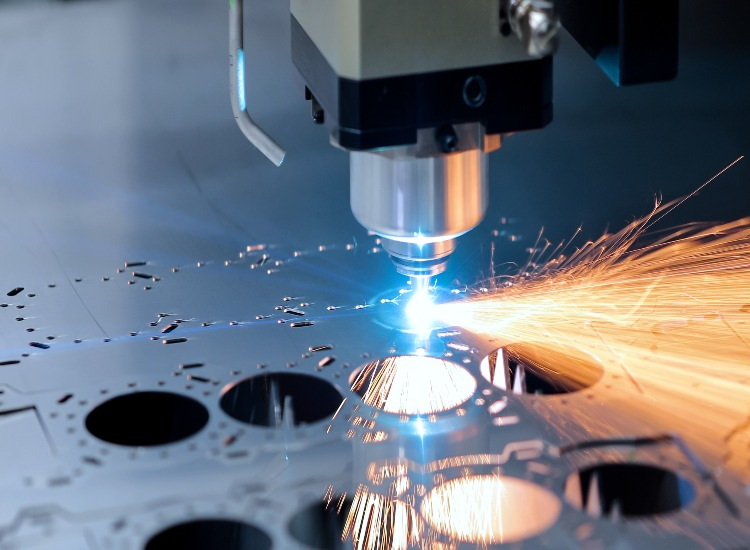
Numerous CNC machines are employed in Aluminium Casting Machining to achieve specific geometries and improve process efficiency:
- CNC Milling Machines: Handle intricate surface features and cavities.
- CNC Lathes or Turning Centers: Produce symmetrical or cylindrical shapes with precision.
- CNC Drilling and Tapping Machines: Ensure accurate hole depths and threaded features.
- 5-Axis CNC Machining Centers: Enable machining from multiple angles, minimizing manual repositioning.
- CNC Grinding Machines: Used for extremely fine surface finishing and tolerance correction.
The integration of these machines allows manufacturers to complete multiple machining steps within a single setup, decreasing lead times and increasing productivity.
The choice of aluminium alloy significantly influences machining performance, strength, and final product characteristics. Commonly used alloys include:
- A356: High corrosion resistance; excellent for automotive and structural parts.
- 6061: Widely used general-purpose alloy with good machinability and weldability.
- 7075: Known for aerospace-grade strength and high fatigue resistance.
- ADC12: Favored in die casting for its excellent dimensional stability.
Selecting the appropriate alloy based on mechanical strength, thermal conductivity, and intended use ensures optimal CNC Machining outcomes and product longevity.
CNC Aluminium Casting Machining is applied in diverse industries that demand precision and reliability:
- Automotive Manufacturing: Engine covers, gearbox housings, brake calipers, and suspension components.
- Aerospace Industry: Aircraft frames, engine mounts, turbine casings, and landing gear components.
- Electronics: Heat sinks, power housings, and enclosures for circuit assemblies.
- Medical Equipment: Lightweight, biocompatible housings and surgical instrument components.
- Industrial Machinery: High-strength brackets, pump bodies, and valve assemblies.
This process's versatility makes it one of the most reliable manufacturing methods for achieving repeatable, high-performance components across global markets.
Despite its many advantages, CNC Aluminium Casting Machining also poses challenges that require careful management:
- Thermal distortion: Excessive heat during machining can warp thin areas.
- Porosity in castings: Air entrapment during casting may lead to weak spots or leaks.
- Tool wear: Abrasive alloys and high-speed machining accelerate cutting tool degradation.
- Setup time and cost: High initial investment for molds and CNC programming.
Addressing these issues involves choosing high-quality tooling, optimizing cutting parameters, enhancing casting techniques, and employing automated coolant systems to maintain temperature stability.
CNC Aluminium Casting Machining aligns with modern sustainability goals. Aluminium is highly recyclable without losing its mechanical integrity, making it an environmentally favorable choice. Recycling reduces energy consumption by up to 95% compared to producing primary aluminium.
Additionally, smart CNC Machining systems now incorporate tool life sensors, real-time temperature monitoring, and AI-driven optimization that minimize energy consumption and waste. Employing closed-loop coolant filtration and chip recovery systems further enhances environmental efficiency.
Emerging technologies are driving a new generation of smart, connected CNC Machining systems integrated into casting operations. The most promising trends include:
- Artificial Intelligence and Machine Learning: Optimizing toolpaths and predicting maintenance needs.
- Additive and Hybrid Manufacturing: Merging 3D printing and CNC Machining for design freedom.
- Digital Twins: Simulating production environments to reduce defects and downtime.
- Robotics and Automation: Automated casting and machining cells running 24/7 with minimal supervision.
- Sustainable Manufacturing Practices: Reducing carbon footprint through renewable energy and recycled materials.
As these trends expand, CNC Aluminium Casting Machining will only become more efficient, automated, and sustainable in the years ahead.
CNC Aluminium Casting Machining stands at the forefront of modern manufacturing, bridging the gap between efficient metal casting and precision CNC Machining. From 3D modeling and casting to high-accuracy cutting and finishing, the process delivers components that meet the toughest engineering demands at controlled costs.
Whether applied to aerospace brackets, automotive housings, or electronic components, CNC Aluminium Casting Machining allows manufacturers to maintain superior quality while reducing waste and turnaround times. Its adaptability, scalability, and compatibility with digital technologies ensure a strong future for the process across all industrial sectors.
Contact us to get more information!
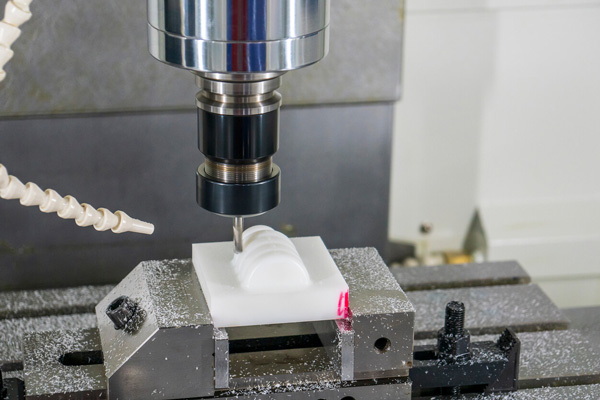
It combines the cost-effectiveness of aluminium casting with the precision of CNC Machining, achieving both structural reliability and dimensional accuracy.
By removing surface imperfections and refining tolerances to achieve exact dimensional specifications required in industrial production.
Automotive, aerospace, electronics, and medical device manufacturers all depend on it for lightweight, durable, and precise components.
Yes, modern CNC Machining systems support flexible scaling—from prototyping to full-scale production with minimal setup changes.
Automation, AI-assisted machining, and sustainable material management are key trends improving quality and efficiency.
1. https://www.makeuk.org/insights/blogs/understanding-cnc-machining
2. https://www.custompartnet.com/wu/aluminum-casting
3. https://www.engineeringlearn.com/cnc-machining-process
4. https://www.azom.com/article.aspx?ArticleID=15963
5. https://www.machinemfg.com/cnc-machining-of-aluminum-alloy/


