From idea to market-ready product, our NPI solutions make every stage easier, faster. Discover How We Help

Views: 222 Author: Tomorrow Publish Time: 2025-12-05 Origin: Site


Content Menu
● Understanding 3D Printing Technology
● The Growing Role in Healthcare Services
>> Personalized Medical Devices
>> Pharmaceutical and Bioprinting Innovations
>> Streamlining Hospital Operations
● Impact on Retail and E-Commerce Services
>> On-Demand Production and Reduced Storage Costs
>> Customer Engagement and Brand Differentiation
● Effects on the Hospitality and Food Service Industry
>> Interior Design and Customization
● Transformation in Education and Training Services
>> Technical and Design Learning
>> Bridging the Digital and Physical Worlds
● Logistics and Supply Chain Services
>> Decentralized Production Networks
>> Spare Parts and Repair Services
● Architectural and Construction Services
>> Sustainable Construction Practices
● Challenges of Integrating 3D Printing into Service Industries
>> Cost and Technical Expertise
>> Intellectual Property Concerns
>> Quality Control and Regulation
● Future Outlook for 3D Printing in Service Industries
● FAQ
>> 1. How does 3D printing benefit service industries?[1][2]
>> 2. What are the main challenges of adopting 3D printing?[3][4]
>> 3. Can 3D printing improve sustainability in services?[2][4]
>> 4. How is 3D printing used in healthcare services?[5][2]
>> 5. What future trends will shape 3D printing in services?[1][4]
Three-dimensional (3D) printing, or additive manufacturing, builds objects layer by layer from digital files, transforming how service industries deliver value. Sectors like healthcare, retail, hospitality, logistics, education, and construction now integrate this technology for customization, rapid production, and cost savings. Service providers gain agility by producing items on-site, reducing reliance on distant suppliers and enabling personalized solutions that meet client demands instantly.
This shift disrupts traditional models, where services focused on labor or logistics, by merging design, fabrication, and delivery. Businesses adopting 3D printing enhance efficiency, foster innovation, and create competitive advantages in fast-paced markets.

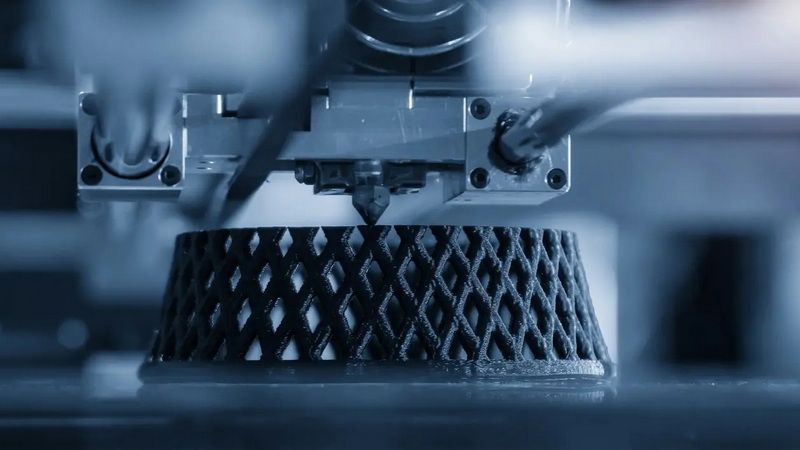
3D printing uses techniques like fused deposition modeling (FDM), selective laser sintering (SLS), and stereolithography to form objects from materials such as plastics, metals, resins, ceramics, and bio-inks. Unlike subtractive methods that carve from blocks, it adds material precisely, minimizing waste and allowing complex geometries impossible with conventional tools.[1][2]
Service industries benefit from its scalability, from small prototypes to large structures. Printers now operate at industrial speeds, supporting on-demand services with integration into software like CAD for seamless workflows.[2][4]
Healthcare services produce custom prosthetics, implants, and dental aligners using patient scans, ensuring perfect fits that boost comfort and recovery. For instance, 3D-printed prosthetic limbs tailored to individual measurements improve functionality and aesthetics, transforming rehabilitation services.[4][5][2]
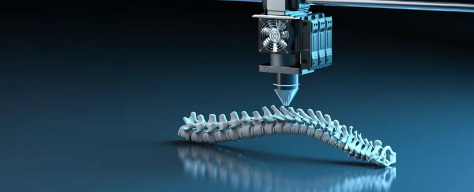
Providers create pills with exact dosages or drug combinations via 3D printing, advancing personalized medicine. Bioprinting fabricates tissues and organs from bio-materials, potentially shortening transplant wait times and enhancing surgical planning with organ replicas from CT scans.[5][2][4]
Hospitals print surgical guides, tools, and training models on-site, cutting supply chain delays. This on-demand capability maintains equipment readiness, reduces costs, and supports emergency responses with custom drug delivery devices.[2][5]
Retailers offer personalized products like jewelry, shoes, and home decor from customer designs, eliminating inventory stockpiles. E-commerce platforms integrate 3D design tools, letting users co-create items for immediate printing and shipping.[5][2]
Services store digital files instead of physical stock, printing only after orders to slash waste and logistics expenses. Gillette's Razor Maker service exemplifies this, allowing custom handles with names and textures at low cost.[5]
Interactive design boosts loyalty as clients personalize eyewear, kitchen tools, or accessories. This mass customization differentiates brands in crowded markets, turning retail into experiential services.[2][5]
Hotels print bespoke furniture, fixtures, and decor matching themes, speeding renovations without shipping delays. Boutique properties use this for unique guest experiences, like printed room art or ergonomic amenities.[2]
Restaurants craft intricate desserts, chocolates, or nutrition-tailored meals with food-grade printers. This accommodates allergies, creates visual spectacles, and supports sustainable options like plant-based alternatives, elevating dining services.[4][2]
Institutions print models for engineering, architecture, and medicine courses, making concepts tangible. Students prototype robotics or anatomical structures, accelerating skill development.[7]
Training centers simulate real scenarios with printed drones or machine mock-ups, preparing workers for industries like aerospace. Programs integrate RFID-enabled models for interactive learning, enhancing research and employability.[3]
Logistics firms enable local printing hubs, shortening delivery times and emissions. Satair, an Airbus subsidiary, prints spare parts to simplify chains and cut lead times from weeks to hours.[1]
Providers like Siemens Mobility produce on-demand rail components, optimizing maintenance for high-volume operations. Airlines and shipping services reduce downtime with custom tooling, improving service reliability.[3][1]
Large-scale printers build homes from recycled materials, minimizing waste and carbon footprints. Firms construct entire structures faster, addressing housing needs efficiently.[4][2]
Services deliver intricate facades or layouts without molds, using concrete extrusion for flexibility. FAMUR Group prints life-size machine mock-ups for client demos, aiding sales and planning.[3][4]
Initial investments in printers and training deter small services, though costs decline yearly. Operators need skills in design software and material handling.[1]
Digital files risk piracy, demanding robust protection for custom designs in services.[3]
Healthcare and aerospace require certified parts; standards evolve to match printing variability. Calibration ensures consistency amid material differences.[4][2]
Energy use and plastic waste persist, but bio-materials and recycling advance sustainability.[4]
Advancements in multi-material printing and AI-driven design will embed 3D tech deeper into services. Expect hybrid models blending print-on-demand with robotics for sectors like defense, producing gear or drones swiftly. Geo Globe Poland shortened assembly lines by weeks using printed prototypes for robot programming. MB Aerospace cut costs on aircraft tooling via 3D sleeves. Wider access will decentralize services globally.[2][3][4]
3D printing redefines service industries by enabling customization, efficiency, and resilience across healthcare, retail, logistics, and beyond. Real-world cases from Airbus subsidiaries to Gillette show reduced costs, faster delivery, and innovative offerings. Challenges like regulation persist, but proactive adaptation positions providers for growth. Early adopters lead in a localized, client-focused era.
It enables on-demand customization, cuts inventory and logistics costs, and boosts client satisfaction in healthcare, retail, and logistics.
High upfront costs, skill gaps, IP risks, and regulatory hurdles slow integration, especially for small services.
Yes, through waste reduction, local production lowering emissions, and recycled materials in construction and food services.
For custom prosthetics, surgical models from scans, implants, and bioprinted tissues enhancing precision and personalization.
AI integration, cheaper multi-material printers, and decentralized networks for faster, greener operations across industries.
[1](https://amfg.ai/industrial-applications-of-3d-printing-the-ultimate-guide/)
[2](https://www.raise3d.com/blog/3d-printing-applications/)
[3](https://3dgence.com/3dnews/12-applications-of-industrial-3d-printer/)
[4](https://www.gs-proto.com/blog/3d-printing-applications/)
[5](https://phrozen3d.com/blogs/resin-3d-printing-latest-news/3d-printing-applications)
[6](https://3dgence.com/america/3dnews/10-applications-of-industrial-3d-printer/)
[7](https://www.fictiv.com/articles/6-industries-being-transformed-by-3d-printing)
[8](https://www.xometry.com/resources/3d-printing/applications-of-3d-printing/)
[9](https://formlabs.com/blog/25-unexpected-3d-printing-use-cases/)
[10](https://en.wikipedia.org/wiki/Applications_of_3D_printing)


