From idea to market-ready product, our NPI solutions make every stage easier, faster. Discover How We Help

Content Menu
● Major Components of CNC Machining
● How CNC Machining Works: Step-by-Step Process
>> Step 1: Designing the CAD Model
>> Step 2: Converting the Design into G-Code
>> Step 4: Machining Operations
>> Step 6: Finishing and Delivery
>> CNC Lathes
>> CNC Routers
>> CNC Grinders
>> CNC EDM (Electrical Discharge Machining)
● Applications of CNC Machining
● Key Factors Influencing CNC Machining Quality
● FAQ
>> 1. What does CNC stand for?
>> 2. What materials can be machined using CNC?
>> 3. How accurate is CNC machining?
>> 4. What programming languages are used in CNC machining?
>> 5. Can CNC machining be used for custom parts?
CNC machining has become a critical manufacturing technology across industries due to its high accuracy, repeatability, and flexibility. From aerospace components to medical devices, this production method ensures precision that manual operations cannot match. Understanding how CNC machining works helps businesses and engineers leverage its advantages to produce efficient, high-quality parts at lower cost.
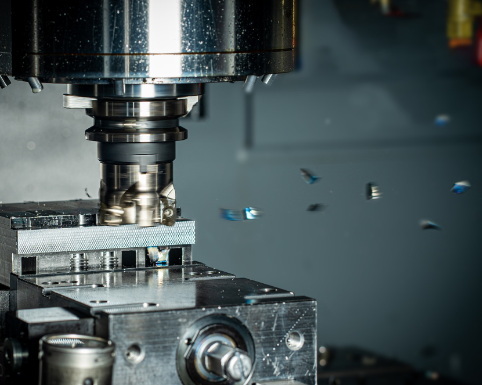
CNC (Computer Numerical Control) machining is a subtractive manufacturing process that uses computerized controls to operate machine tools. These tools remove material from a workpiece to shape it into a finished component. The process relies on pre-programmed software that dictates machine movement, speed, and tool paths. Common CNC machines include mills, lathes, routers, and grinders.
CNC machining replaces manual control with automated, computer-driven operations. The entire manufacturing sequence—from tool positioning to spindle speed—is controlled precisely through digital commands, minimizing errors and increasing repeatability. CNC machining supports different materials, including metals, plastics, composites, and ceramics, making it suitable for varied industrial applications.
To understand how CNC machining works, it is essential to recognize its primary components. Each part contributes to the overall precision and flexibility of the system.
CNC systems rely on CAD (Computer-Aided Design) and CAM (Computer-Aided Manufacturing) software. CAD software is used to design the 2D or 3D model of the part. The CAM software then generates toolpaths and G-code instructions that the CNC machine follows. These codes set parameters for cutting speed, feed rate, and tool movements.
The controller is the brain of the CNC machine. It interprets G-code commands and translates them into precise movements. Modern controllers are equipped with microprocessors that allow real-time data analysis and error reduction. They ensure exact synchronization between machine axes and cutting tools.
The tool performs the actual cutting, drilling, shaping, or milling operation. Different tools are used depending on the desired finish and material type. Precision tool holders secure the cutting tool and reduce vibration during operation.
The workpiece is clamped securely to a worktable using fixtures. The stability of the fixture ensures consistency, accuracy, and safe operation, especially in high-speed machining.
Most CNC machines include a cutting fluid system to reduce heat and friction. The fluid helps in tool life improvement and better surface finishing.
The CNC machining process can be broken into several systematic steps, each contributing to the production of accurate and consistent parts.
The process begins with a digital design using CAD software. Engineers create a model that includes all necessary dimensions, tolerances, and surface finishes. The CAD file serves as the blueprint for manufacturing.
The CAD design is imported into CAM software, which generates a corresponding G-code program. The G-code contains instructions for every movement the machine makes—coordinates, feed rates, spindle speeds, and tool changes. Once generated, the code is uploaded to the CNC machine controller.
Before machining begins, the operator sets up the machine. This involves mounting the workpiece, selecting cutting tools, and calibrating tool positions. Setup accuracy is vital to achieving precise results.
The machining begins once the program is loaded and the setup verified. The machine tools move along defined axes (X, Y, Z) according to G-code instructions. Cutting operations remove excess material layer by layer until the desired shape is achieved. Real-time sensors monitor pressure, speed, and temperature for optimal performance.
After machining, every part undergoes inspection for dimensional accuracy and surface finish. Coordinate measuring machines (CMMs), laser scanners, or gauges are used to verify compliance with design specifications.
Depending on requirements, secondary processes such as anodizing, polishing, or coating may follow. The final product is then cleaned, packed, and shipped to the client.
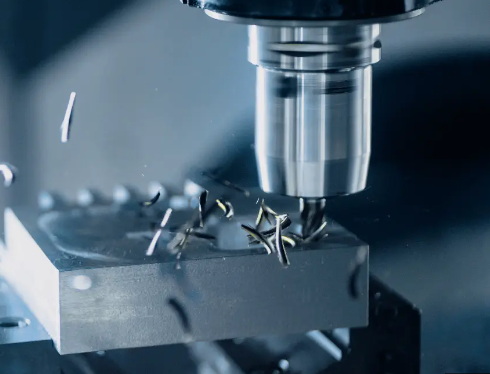
Different types of CNC machines specialize in specific manufacturing tasks.
CNC milling machines use rotating cutting tools to remove material. They perform precise contouring, drilling, and surface finishing. Multi-axis machines (3, 4, or 5 axes) can create complex geometries in a single setup.
Lathes operate by rotating the workpiece while stationary tools cut the material. They are mainly used to produce cylindrical parts like shafts, pins, and bushings. CNC lathes ensure excellent surface finish and dimensional consistency.
Routers are widely used for cutting softer materials like wood, plastic, and aluminum. They are ideal for sign-making, mold creation, and furniture production.
CNC grinders use abrasive wheels to achieve fine surfaces and tight tolerances. They are typically used in automotive and aerospace sectors for precision finishing.
EDM uses electrical sparks to cut hard metals and intricate shapes that cannot be achieved by conventional tools. It is commonly employed for toolmaking and mold manufacturing.
CNC machining offers numerous advantages that make it a preferred choice across industries:
- High precision and repeatability.
- Reduced human error and labor dependency.
- Flexibility to produce both prototypes and bulk runs.
- Versatile material compatibility.
- Faster production cycles and optimized cost efficiency.
CNC machining is highly versatile and impacts numerous industries significantly. Some key applications include:
- Aerospace: Production of heat-resistant turbine blades, engine chambers, lightweight aluminum fuselage parts, wing sections, landing gear assemblies, and titanium brackets that reduce aircraft weight while maintaining strength. Major aerospace companies rely heavily on CNC machining to achieve high precision and safety standards.
- Automotive: CNC machining produces brake components, gearboxes, engine parts, transmission systems, battery housings for electric vehicles, and custom prototyping. The technology supports mass production and continuous innovation with efficient material use and reduced waste.
- Medical: CNC machining is essential for customized implants, surgical instruments, MRI machine parts, orthotic devices, medical research equipment, and FDA-approved sterile packaging. Precision is critical to ensure patient safety and regulatory compliance.
- Electronics: Manufacture of micro components, circuit boards, housing for devices, heat sinks, connectors, and enclosures. CNC machining supports miniaturization and thermal management in powerful chips for smartphones, computers, and semiconductor manufacturing.
- Renewable Energy: Components such as turbine hubs, blade molds, precision gearboxes, solar panel frames, generator housings, and bearings produced by CNC machining optimize efficiency and reliability in wind and solar energy production.
- Agriculture: Production of tractor components, irrigation system parts, harvesters, tools, and machinery parts. CNC machining provides durability and performance in demanding work environments.
- Food and Beverage: CNC technology is used to manufacture molds, food processing tools, packaging machinery parts, and bakeware. It ensures hygiene and precision in equipment used for production and packaging.
- Furniture and Woodworking: CNC machining speeds up panel cutting, kitchen countertops, cabinetry, decorative wall panels, and ergonomic prototypes. It supports mass customization and reduces material wastage in furniture production.
- Defense & Military: Precision parts manufacturing for weapons, surveillance devices, vehicle components, and protective equipment, requiring high accuracy and durability.
- Industrial Machinery: Production of gears, shafts, rollers, conveyor parts, and safety device casings that maintain machinery functionality and safety.
These application areas reveal CNC machining's broad impact on modern manufacturing, enabling faster product development and tighter tolerances across industries.[1][2][3]
Several factors affect the performance and output of CNC machining.
- Tool Selection: Proper cutting tools for specific materials improve efficiency, surface finish, and tool longevity.
- Material Characteristics: Hardness, elasticity, and melting point dictate machining parameters like feed rate and spindle speed.
- Machine Condition: Regular calibration and maintenance prevent errors from vibration or wear.
- Operator Expertise: Skilled personnel ensure correct setups, tool changes, and troubleshooting.
- Cutting Parameters: Optimizing speed, feed, and depth of cut influences quality and cycle time.
Modern CNC machining is evolving with innovations such as artificial intelligence, robotics, and Internet of Things (IoT) integration. These advancements enable predictive maintenance, process optimization, and real-time quality control. Hybrid manufacturing systems combining additive and subtractive technologies allow faster prototyping and complex part production.
Sustainable machining practices focus on reducing energy consumption and material waste. Cloud-based platforms enhance remote operation and global collaboration, accelerating production timelines and customization capabilities.
CNC machining is the cornerstone of advanced manufacturing. It combines computer control with precision tooling to produce complex, accurate parts consistently. From initial digital design to final inspection, CNC machining streamlines production while reducing errors and costs. Its wide industry adoption—from aerospace to food processing—demonstrates its versatility. With ongoing technological progress, CNC machining will continue to drive innovation and efficiency in manufacturing.
CNC stands for Computer Numerical Control, referring to machines guided by computer programs to perform precise manufacturing tasks.
Materials include metals (aluminum, steel, titanium), plastics, composites, ceramics, and other specialty materials.
Modern CNC machines achieve tolerances as tight as ±0.005 mm, suitable for high-precision applications.
The primary language is G-code, with some machines supporting M-code and manufacturer-specific commands.
Yes, CNC is flexible for both prototyping and large-scale production, allowing customized and complex parts with high precision.
[1](https://venttup.com/cnc-machining-industries-applications/)
[2](https://www.3erp.com/blog/cnc-machining-applications-and-uses/)
[3](https://www.americanmicroinc.com/resources/industries-use-cnc-machinery/)
[4](https://qviro.com/blog/what-industries-use-cnc-machines/)
[5](https://www.reddit.com/r/MechanicalEngineering/comments/1953x9j/which_industrys_uses_cnc_milling_the_most_for/)
[6](https://astromachineworks.com/cnc-machine-industries/)
[7](https://www.ametals.com/post/7-uses-of-cnc-machining)
[8](https://millenniumprecision.com/7-key-industries-benefit-cnc-machining/)
[9](https://durexinc.com/top-industries-using-cnc-machining/)
[10](https://resources.hartfordtechnologies.com/blog/industries-that-rely-on-cnc-machining)


