From idea to market-ready product, our NPI solutions make every stage easier, faster. Discover How We Help

Views: 222 Author: Tomorrow Publish Time: 2026-01-21 Origin: Site


Content Menu
● The Evolution of Manufacturing Precision
● The Role of CNC Machining in Modern Manufacturing
>> 1. Superior Precision and Consistency
>> 2. Increased Efficiency and Productivity
>> 3. Rapid Prototyping and Product Innovation
>> 4. Cost Reduction and Resource Optimization
>> 5. Integration with Smart and Digital Manufacturing
● Technological Advances Powering CNC Machining
>> Multi-Axis Machining and Complex Geometry
>> Automation and Robotics Integration
>> AI and Machine Learning Optimization
>> Hybrid Manufacturing Systems
>> Cloud and Remote CNC Management
● Economic and Workforce Impacts of CNC Machining
>> Lowering Production Costs and Increasing ROI
>> Workforce Transformation and Skill Development
>> Enhancing Global Competitiveness
>> Promoting Sustainable Manufacturing
● Industry Applications of CNC Machining
>> 1. What is CNC Machining used for?
>> 2. How does CNC Machining differ from traditional manufacturing?
>> 3. What are the main benefits of CNC Machining?
>> 4. Is CNC Machining environmentally friendly?
>> 5. What challenges does CNC Machining face today?
CNC Machining has revolutionized the manufacturing sector by combining digital precision with mechanical power. It enables manufacturers to produce components faster, more accurately, and with much higher repeatability than traditional processes. From product design to final assembly, CNC Machining has become a key driving force in modern industrial production.
This technology not only changes how products are made but also reshapes the economics of global manufacturing, enabling companies to achieve scalability, customization, and efficiency simultaneously. In this article, we explore in detail how CNC Machining impacts manufacturing, the advanced technologies behind it, its economic and environmental implications, and the direction it is heading in the future.
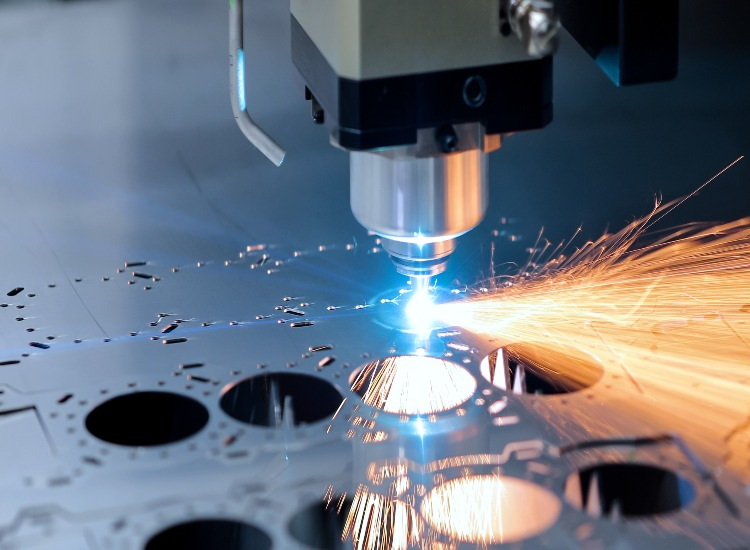
CNC stands for Computer Numerical Control, a system that uses programmed commands to operate manufacturing tools and equipment. CNC Machining employs computer-controlled lathes, milling machines, drills, and grinders to precisely shape raw materials such as metals, plastics, and composites. The digital instructions guide machine operations, specifying cutting paths, speeds, and tooling angles.
This digital-driven process eliminates the limitations of manual work. Operators load a computer file, often designed in CAD software and processed through CAM systems, which transforms it into code interpretable by the machine. CNC Machining ensures each part produced matches the digital design to precise specifications, achieving tolerances within thousandths of an inch.
Historically, manufacturing relied on manual machining and craftsmanship. While this achieved acceptable quality for many applications, it introduced inconsistency and higher labor costs. CNC Machining introduced unprecedented precision, reducing errors and enabling the mass production of complex parts.
Today, precision is critical across industries. In aerospace, even a tiny dimensional deviation can impact flight performance. In medical technology, surgical tools and implants must fit perfectly. CNC Machining addresses these demands, delivering accuracy that manual processes cannot replicate.
The integration of high-speed spindles, multi-axis movement, and automatic calibration systems has made precision machining not only possible but affordable and scalable. Manufacturers now use real-time sensors to maintain tolerances during production, ensuring that every component meets stringent quality standards.
CNC Machining has become an essential part of the modern manufacturing workflow. Its versatility and reliability make it a valuable tool for multiple stages of production—from prototyping to full-scale mass production.
CNC Machining's capability to maintain extreme accuracy across large production runs distinguishes it from older techniques. Even when producing thousands of identical components, precision remains constant. Automated feedback systems continuously monitor and adjust tool paths to eliminate deviations.
This consistency is crucial for manufacturers producing parts that must fit into larger assemblies, such as automotive engines or mechanical equipment. It ensures that each part performs exactly as intended, maintaining uniform quality and minimizing quality-control rejects.
Automation minimizes manual intervention, allowing CNC Machining to operate continuously—even during non-working hours. Since machines can function under minimal supervision, many factories utilize "lights-out" manufacturing, where operations continue 24/7 without human presence.
Multi-axis machining centers combine several machining processes—milling, drilling, and cutting—into one setup, reducing preparation time. Fewer setups translate into faster cycle times and higher production output.
Product designers rely heavily on CNC Machining for rapid prototyping. Once a design file is complete, it can be machined directly without the need for specialized tooling. This rapid turnaround accelerates product development cycles, helping companies bring new innovations to market faster.
CNC Machining also allows designers to experiment with different materials and dimensions, validating concepts before moving to mass production. The flexibility to quickly produce functional prototypes is a major advantage in competitive markets.
Although CNC equipment requires a high upfront investment, the long-term operational savings are significant. Automated precision reduces waste and minimizes errors, resulting in lower scrap rates. Furthermore, advanced cutting strategies optimize material usage, ensuring efficient resource consumption.
Energy-efficient systems and toolpath optimization further lower operational costs, improving the manufacturer's bottom line. This combination of quality and cost control makes CNC Machining an ideal choice for competitive global manufacturing.
CNC Machining fits seamlessly into the framework of Industry 4.0. It connects with digital networks, enabling machines to communicate, share data, and make autonomous adjustments. Integration with sensors, IoT systems, and AI analytics transforms the workshop into a smart manufacturing cell.
Through predictive maintenance, data analytics can anticipate tool wear or machine malfunctions before they occur. This prevents production downtime, enhancing operational stability and output consistency.
The ongoing evolution of CNC Machining is driven by technological innovation. These developments improve accuracy, versatility, and connectivity, ensuring that CNC systems remain central to industrial production.
Traditional three-axis machines move along the X, Y, and Z axes, which limits the angles from which tools can approach the material. Modern 4-axis and 5-axis CNC machines allow simultaneous movement in multiple directions, enabling the production of intricate and curved geometries with minimal repositioning. This expansion dramatically reduces machining time and enhances precision for complex designs used in aerospace turbines or biomedical components.
Automation plays a defining role in modern CNC shops. Robotic arms are now used for material handling, part changing, and inspection. Integrating robotics with CNC Machining enhances process continuity and reduces idle time, paving the way for full-scale unmanned manufacturing systems.
Artificial intelligence (AI) and machine learning are redefining CNC Machining's efficiency. These technologies optimize cutting speeds, analyze vibration data, predict tool wear, and fine-tune operations in real time. The outcome is smoother surface finishes, longer tool life, and more stable production lines.
Hybrid manufacturing merges CNC Machining with additive manufacturing (3D printing). By combining both additive and subtractive techniques, it's possible to build complex components that were previously impossible to machine conventionally. After 3D printing forms the base shape, CNC Machining refines surfaces and ensures precision.
With the advancement of cloud computing, CNC machines can now be monitored and managed remotely. Managers can upload new cutting programs, track performance data, and adjust parameters online. This approach increases flexibility, particularly for global manufacturers managing multiple facilities.
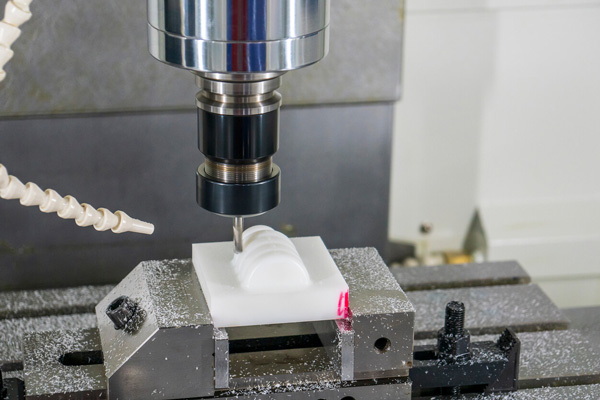
The economic influence of CNC Machining extends far beyond cost savings. It transforms job roles, supply chains, and global competitiveness.
The efficiency and minimal waste of CNC Machining decrease per-unit production costs significantly. While initial capital investment in machines is high, the return on investment (ROI) is quick, especially for high-volume or precision-demanding industries like aerospace and automotive manufacturing.
CNC Machining changes, but does not eliminate, the need for human labor. Instead of traditional machine operators, the industry now requires skilled CNC programmers, engineers, and maintenance technicians. This shift emphasizes high-skill training programs in CAD, CAM, and robotics.
Technical education and vocational schools have adapted by integrating digital manufacturing and automation modules, preparing workers for the new production reality.
Countries and manufacturers that invest in CNC Machining achieve stronger positions in global markets. Precision, repeatability, and scalable production give them advantages in exporting high-value parts. These factors strengthen industrial ecosystems and drive sustainable growth within competitive international supply chains.
CNC Machining contributes significantly to sustainability through waste reduction and material efficiency. Advanced machining strategies minimize raw material use and optimize energy consumption. Coolant recycling systems and precision tooling reduce the environmental footprint of production lines, aligning industrial processes with global sustainability goals.
The power of CNC Machining spans across almost all industrial sectors.
- Aerospace Manufacturing: Produces highly complex and lightweight components such as turbine blades and structural assemblies.
- Automotive Industry: Enables the precise production of engine blocks, brake systems, and transmission housings.
- Medical Technology: Manufactures surgical instruments, dental tools, and implants with precise tolerances.
- Electronics Manufacturing: Uses micro-CNC systems to machine small components and custom enclosures for circuit boards.
- Defense and Energy Industries: Produces durable components for weapon systems, turbines, and power generation equipment.
CNC Machining continues to drive innovation in these fields, ensuring better part reliability, performance, and efficiency.
CNC Machining's future lies in deeper digital integration, more sustainable operations, and higher levels of automation.
- Autonomous factories: Systems utilizing interconnected CNC cells and AI-driven robots will enable complete automation.
- Smart materials: Machines will adapt automatically to material characteristics through intelligent sensors.
- Remote collaboration: Engineers worldwide will program, simulate, and control production virtually using cloud platforms.
- Sustainable production: Energy optimization, renewable power integration, and recyclable materials will make CNC Machining greener.
As industries transition toward data-driven ecosystems, CNC Machining will remain at the core of intelligent manufacturing transformation.
CNC Machining stands as a cornerstone of modern industry, blending digital intelligence with mechanical precision. Its influence extends across design, prototyping, and high-volume production, offering unmatched accuracy, efficiency, and versatility. By reducing human error, minimizing waste, and supporting innovation, CNC Machining drives manufacturing toward a smarter, more sustainable future. As technological advancements continue, its role will only expand, reinforcing its position as an indispensable asset in global manufacturing.
Contact us to get more information!

CNC Machining is used to manufacture precision components for industries such as aerospace, automotive, medical devices, and electronics. It delivers consistent results for both one-off prototypes and mass production runs.
Traditional machining relies on human control, while CNC Machining uses computer programming to automate cutting tool movement. This difference leads to higher accuracy, faster throughput, and better repeatability.
Key benefits include improved precision, reduced waste, continuous operation, lower labor costs, and compatibility with smart manufacturing systems.
Yes. It reduces waste, optimizes material use, and enables energy-efficient production processes. Coolant recycling systems and sustainable toolpath programming further improve environmental performance.
The main challenges are high initial costs, the need for skilled workforce training, and competition from emerging additive technologies. However, ongoing innovation continues to make CNC systems more accessible and efficient.
1. https://www.mastercam.com/blog/the-importance-of-cnc-machining-in-modern-manufacturing
2. https://www.autodesk.com/solutions/machining/overview
3. https://www.engineering.com/story/how-cnc-machining-is-transforming-manufacturing
4. https://www.machinemfg.com/what-is-cnc-machining/
5. https://www.haascnc.com/resources/articles-and-videos/cnc-basics.html


