From idea to market-ready product, our NPI solutions make every stage easier, faster. Discover How We Help

Views: 222 Author: Tomorrow Publish Time: 2026-01-21 Origin: Site


Content Menu
● The Role of CNC Machining in the Medical Industry
● Specialized Materials for Medical CNC Machining
>> Common CNC Machining Materials in the Medical Field
● Precision and Tolerance Requirements
● Regulatory and Quality Compliance
>> Core Standards and Certifications in Medical CNC Manufacturing
● Cleanroom Machining and Contamination Control
● Design Complexity and Customization
● Production Volume and Cost Efficiency
● Technological Innovations in Medical CNC Machining
● Sustainability and Waste Reduction in CNC Medical Manufacturing
● FAQs about CNC Machining for Medical Purposes
>> 1. What is CNC machining used for in healthcare?
>> 2. Why is titanium widely used in medical CNC machining?
>> 3. How does medical CNC machining ensure quality control?
>> 4. What technologies are improving medical CNC machining today?
>> 5. How do cleanroom conditions influence medical part production?
CNC machining has become indispensable in modern manufacturing, powering precision across automotive, aerospace, electronics, and healthcare sectors. Yet, CNC machining for medical purposes stands apart as the most demanding and regulated application of all. The stakes in medical production are far higher—components not only need to perform flawlessly but must also ensure biocompatibility, reliability, and total safety for human use.
From orthopedic implants to surgical instruments, CNC machining shapes the most delicate and life-saving tools used by doctors worldwide. To understand its uniqueness, we must explore how medical requirements drive different design philosophies, production processes, and quality standards when compared to other industries.
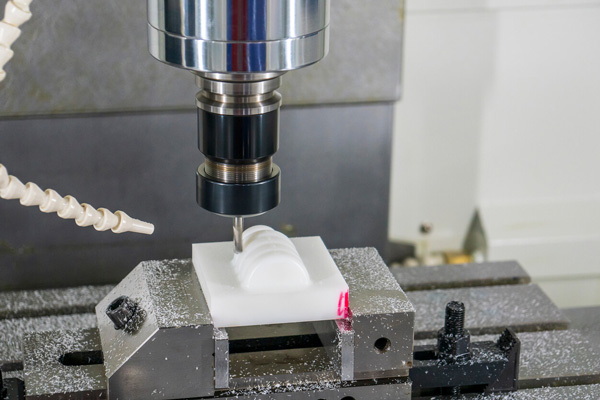
In healthcare manufacturing, CNC machining provides the precision and scalability required for both prototyping and mass production of surgical tools, prosthetics, and implants. Every medical device must meet exact specifications, often within microns, to ensure proper function and patient safety. A tiny dimensional variance can affect surgical success or device performance, so CNC machining in the medical field is engineered to deliver flawless accuracy at every step.
Beyond mechanical precision, medical machining emphasizes product consistency and documentation. Manufacturers must maintain reproducibility across thousands of components, ensuring each part meets identical technical and biological requirements. Unlike consumer industries, where performance can tolerate minor deviations, medical-grade CNC machining has zero room for error.
Material selection is another key factor that distinguishes medical CNC machining from general manufacturing. While industries such as automotive or aerospace focus on materials that withstand stress or high temperatures, medical applications need materials that are not only durable but also biocompatible, non-toxic, corrosion-resistant, and capable of enduring repeated sterilization cycles.
- Titanium and titanium alloys: Generally used for implants and prosthetics, titanium combines exceptional strength with lightweight and corrosion-resistant properties. Its ability to bond naturally with human bone (osseointegration) makes it ideal for surgical implants.
- Surgical-grade stainless steel: Commonly used for instruments such as scalpels, clamps, and forceps. It offers durability, sterilization compatibility, and cost efficiency.
- Cobalt-chrome alloys: Known for toughness and heat resistance, making them suitable for joint replacements and prosthetics that undergo significant mechanical stress.
- Medical-grade polymers: PEEK, PTFE, UHMWPE, and Ultem are lightweight, moldable materials used for disposable devices and equipment housings that require chemical inertness and sterilizability.
The stringent sourcing standards for these materials ensure they meet FDA and ISO 13485 compliance. Suppliers must maintain full traceability and documentation of composition, testing, and storage conditions. Every bar, rod, or billet of material used in CNC machining medical parts must be certified safe for human contact.
Accuracy defines the world of medical CNC machining. While other sectors might work with tolerances of ±0.01 mm, medical machining can require precision within ±0.002 mm or even smaller. This ultra-tight tolerance ensures that surgical implants fit perfectly in human anatomy and that miniature components in diagnostic tools perform without operational failure.
To achieve this level of accuracy, manufacturers rely on:
- Multi-axis CNC mills and lathes capable of cutting intricate geometries.
- Real-time toolpath correction systems that adjust during machining.
- Computerized measurement devices (CMM) for continuous inspection.
- Thermal management controls in manufacturing environments to prevent expansion-related dimensional errors.
Precision machining for medical purposes often also involves micromachining — the art of cutting extremely small profiles, holes, and features that may be invisible to the naked eye, essential for devices like pacemakers, catheters, and endoscopic tools.
The medical sector is one of the most heavily regulated in the world. Each CNC-machined part used in healthcare must adhere to international standards that guarantee safety and quality. This includes design validation, process qualification, and full traceability from raw materials to finished products.
- ISO 13485: Defines quality system requirements specific to medical device manufacturing.
- FDA CFR 21 Part 820: U.S. law regulating device manufacturing under the Quality System Regulation (QSR).
- EU MDR (Medical Device Regulation): Establishes product safety and post-market surveillance obligations in Europe.
- Good Manufacturing Practice (GMP): Ensures consistent product quality and compliance.
These requirements force manufacturers to implement strict process documentation, inspection checkpoints, and risk management protocols. Every step, from machine calibration to final assembly, must be recorded and verifiable. Compared with aerospace or electronics, where documentation is important but not always mandatory per part, in medical CNC machining, documentation equals legality—without it, a product cannot enter the market.
Another distinct feature of CNC machining for medical devices is the controlled environment in which machining and assembly occur. Components intended for surgical or implant use must often be produced in Class 7 or Class 8 cleanrooms to ensure zero contamination from airborne particles or lubricants.
Cleanroom-compatible CNC machining requires:
- Use of biocompatible cutting fluids that leave no chemical residue.
- HEPA filtration systems maintaining air quality.
- Personnel gowning and entry procedures to minimize contamination risk.
- Specialized washing, passivation, and sterilization before packaging.
This level of environmental control ensures that when the part leaves the production floor, it's already compliant with sterilization-ready standards for use in hospitals or operating theaters. Other industries rarely demand this extreme cleanliness since their products do not interact directly with the human body.
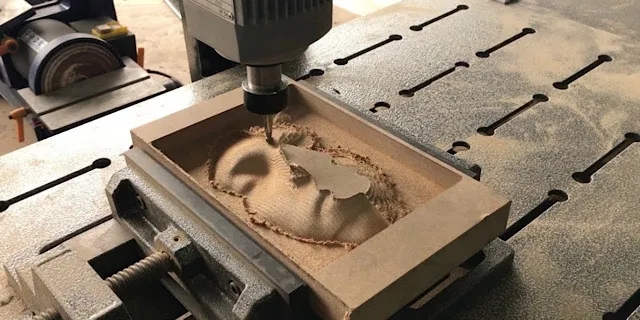
A growing area within medical CNC machining is patient-specific customization. For example, orthopedic implants, dental crowns, and cranial plates can now be designed based on 3D imaging data. Through CAD/CAM integration, CNC machines translate CT and MRI scans into real parts that match a patient's anatomical structure exactly.
This personalized manufacturing approach leads to improved surgical accuracy, reduced recovery times, and better overall patient outcomes. CNC machining's compatibility with digital scanning, 3D modeling, and precision milling makes it ideal for rapid prototyping or producing one-of-a-kind components without sacrificing dimensional accuracy or material integrity.
Beyond implants, custom CNC machining also serves hospitals and research institutions that require specialized tooling and laboratory fixtures, reflecting a wider demand for one-off or low-volume precision components in medicine.
Medical CNC production differs from large-scale industries primarily in volume. Automotive firms might run thousands of parts per day, but medical manufacturers often focus on low-volume, high-value production. Each device may require intensive engineering time, multi-axis machining, polishing, and multiple inspection stages.
This individualized production raises costs but ensures safety and performance. The medical market values precision over mass output. In fact, even prototypes for a new surgical instrument undergo rigorous validation and testing long before entering clinical trials.
Still, advancements in automation, CNC simulation software, and hybrid additive-subtractive machining are helping reduce costs and production time while maintaining the same quality level.
Continuous innovation defines the global medical machining landscape. Modern manufacturing integrates digital monitoring, automation, and hybrid processes to further enhance reliability and precision.
- Hybrid manufacturing: Combining CNC machining with 3D printing for parts that require both fine detailing and internal lattice structures, such as bone scaffolds.
- Micromachining and nanomachining: Enabled by ultra-high spindle speed CNC systems, allowing highly detailed components for micro-surgical instruments.
- AI-driven quality control: Machine learning systems now monitor vibration, tool wear, and surface finish in real time to maintain optimal production conditions.
- Robotic automation: Used for tool changes, part handling, and surface cleaning in sterile environments to minimize human error.
- High-speed multi-axis machining: Allows reduced lead time while maintaining surface smoothness and tolerance.
The medical field's need for reliability drives ongoing research into smart machining systems capable of self-correcting operations, creating parts with minimized human oversight.
As sustainability takes center stage in global manufacturing, medical CNC machining is adapting through energy-efficient systems, recycled materials, and precision cutting that minimizes waste. High-performance CNC machines now use adaptive toolpaths that optimize material removal, saving both raw materials and machining time.
Additionally, process improvements like dry machining, coolant filtration, and scrap reprocessing support both environmental and cost efficiency goals without compromising compliance or quality standards. This eco-conscious evolution aligns with the healthcare sector's growing emphasis on sustainable production and carbon-neutral supply chains.
CNC machining's adaptability makes it crucial across numerous industries, but within medicine, its role extends far beyond engineering—it supports life-saving innovation. The medical CNC machining process stands apart through its heightened precision, material specificity, regulatory complexity, and cleanroom standards that protect human health. Unlike industries driven by speed or scale, medical manufacturing focuses on absolute accuracy, extensive validation, and uncompromising quality.
Whether crafting custom implants, surgical tools, or diagnostic components, CNC machining ensures that each medical device performs flawlessly when it matters most. As technology advances, AI integration, micromachining, and additive manufacturing will continue refining this vital process, ensuring medical CNC machining remains at the cutting edge of both manufacturing excellence and patient care.
Contact us to get more information!

CNC machining is used to produce surgical tools, orthopedic implants, dental devices, and precision diagnostic components that require superior accuracy and biocompatibility.
Titanium offers strength, corrosion resistance, and natural compatibility with human tissue, making it ideal for long-term implants and bone-interfacing components.
Through rigorous regulatory frameworks such as ISO 13485 and FDA guidelines, CNC machining for medical applications demands full traceability, documented inspections, and equipment calibration for every part produced.
Modern advancements include hybrid additive manufacturing, AI-based monitoring, micromachining systems, and robotic automation to enhance precision and consistency.
Cleanroom manufacturing ensures components remain sterile and contaminant-free, vital for implants and surgical instruments that come into direct contact with human tissue.
1. https://www.fda.gov/medical-devices
2. https://www.iso.org/standard/59752.html
3. https://www.mddionline.com
4. https://www.medicaldesignbriefs.com
5. https://www.engineering.com


