From idea to market-ready product, our NPI solutions make every stage easier, faster. Discover How We Help

Views: 222 Author: Tomorrow Publish Time: 2026-01-18 Origin: Site


Content Menu
● Understanding CNC Machining and Automation
● Key Advantages of Automation in CNC Machining
>> 1. Enhanced Efficiency and Throughput
>> 2. Improved Accuracy and Consistency
>> 3. Reduced Labor Costs and Skill Shortages
>> 4. Shorter Lead Times and Faster Production Cycles
>> 5. Smarter Data Collection and Real-Time Monitoring
● Automation Technologies Applied in CNC Machining
● Impact of Automation on Quality Control
● Cost-Benefit Analysis of CNC Automation
>> Initial Investment and Setup Costs
>> Operational Savings and Efficiency Gains
>> Quality and Consistency as Economic Advantages
>> Increased Equipment Lifespan
>> Long-Term Return on Investment
● Overcoming the Challenges of CNC Automation
● Future Outlook: The Path Toward Smart Factories
● FAQ
>> 1. What are the main benefits of automating CNC machining?
>> 2. Is automation suitable for small or medium-scale CNC shops?
>> 3. How does automation improve machine maintenance?
>> 4. What skills are required to manage automated CNC systems?
>> 5. What is the long-term impact of automation on manufacturing?
CNC machining is one of the most essential processes in modern manufacturing, known for its ability to produce highly precise and complex components for industries such as aerospace, automotive, healthcare, and electronics. As market competition intensifies and customers demand shorter lead times with superior quality, manufacturers are turning toward automation to achieve consistent performance and elevated productivity.
Automation in CNC machining transforms traditional operations into intelligent manufacturing systems driven by robotics, advanced software, and data connectivity. This evolution enables faster production cycles, reduces error rates, and enhances operational efficiency.

CNC (Computer Numerical Control) machining uses computer-programmed commands to guide machine tools like mills, lathes, and routers. Instead of relying on manual manipulation, CNC machines interpret digital blueprints to execute exact cuts, drills, and shapes with micrometer-level precision.
Automation enhances this process by integrating robotic systems, sensors, data analytics, and control algorithms that reduce human interaction while increasing throughput. These advancements allow machines to run continuously and deliver consistently high-quality results, even under demanding production schedules.
Automated CNC systems can operate 24 hours a day with minimal interruptions. Robots can handle repetitive and labor-intensive tasks such as material loading, unloading, and tool changes without human supervision. This approach maximizes machine uptime and overall equipment efficiency.
Manufacturers also benefit from “lights-out manufacturing,” where unmanned production runs continue overnight. By leveraging automation, companies ensure that valuable machine hours are never wasted, leading to higher output rates and optimal utilization of equipment.
Automation dramatically reduces human variability and error. Once a CNC program has been fine-tuned, the process can be repeated thousands of times with identical results. Sensors continuously monitor machine conditions, ensuring that parameters such as feed rates, speed, and cutting depth are executed exactly as intended.
This precision guarantees product uniformity and reduces errors associated with manual input. In industries where tolerances are measured in microns—such as aerospace or medical device manufacturing—automation ensures that every part adheres to the same high standard, minimizing waste and rework.
Global manufacturing industries are facing skilled labor shortages, making automation an effective solution to maintain productivity without relying solely on human operators. One technician can now supervise multiple machines simultaneously through centralized digital dashboards.
Although initial automation investment can be substantial, the long-term cost savings are significant. Labor costs are reduced, training requirements are minimized, and employees can redirect their focus toward higher-value activities like programming, quality assurance, and continuous process optimization.
Automation speeds up every phase of CNC machining—from part setup to final inspection. Automated material handling, robotic arm integration, and synchronized production scheduling minimize idle time.
Manufacturers can achieve higher throughput with shorter production windows, giving them a competitive advantage in industries that demand rapid turnaround times. For example, aerospace suppliers using automated CNC cells can deliver finished components days or even weeks faster than those relying solely on manual processes.
Modern CNC automation systems integrate with the Industrial Internet of Things (IIoT), enabling real-time data collection from multiple machines simultaneously. This connectivity allows for advanced analytics that can predict tool wear, detect inefficiencies, and schedule maintenance before failures occur.
By leveraging data-driven insights, manufacturers can continuously optimize operations, improve product quality, and ensure maximum uptime. The combination of smart monitoring and automation simplifies decision-making and drives continuous process improvement.
Several automation technologies have revolutionized CNC machining operations, including:
- Robotic Arms and Material Handling Systems: Enable seamless part transfer between machines and inspection stations.
- Automated Tool Changers (ATC): Reduce setup time by enabling rapid replacement of cutting tools mid-process.
- Pallet Changers and Workholding Systems: Facilitate continuous production by allowing pre-setup of materials.
- Sensor-Based Machine Monitoring: Detects tool damage, vibration, or misalignment in real-time to prevent defects.
- Software and System Integration: Connects CAD/CAM systems with ERP and MES platforms for unified production management.
These technologies collectively ensure higher repeatability, shorter production cycles, and improved workflow coordination.
Automation not only enhances productivity but also improves accuracy in quality assurance. Advanced inspection systems, such as coordinate measuring machines (CMMs) and optical scanners, can automatically verify the dimensional accuracy of parts during or immediately after machining.
In-process monitoring ensures that deviations are corrected instantly, eliminating defective products before they progress through the production chain. This reduces waste, prevents costly recalls, and maintains brand reputation for quality.
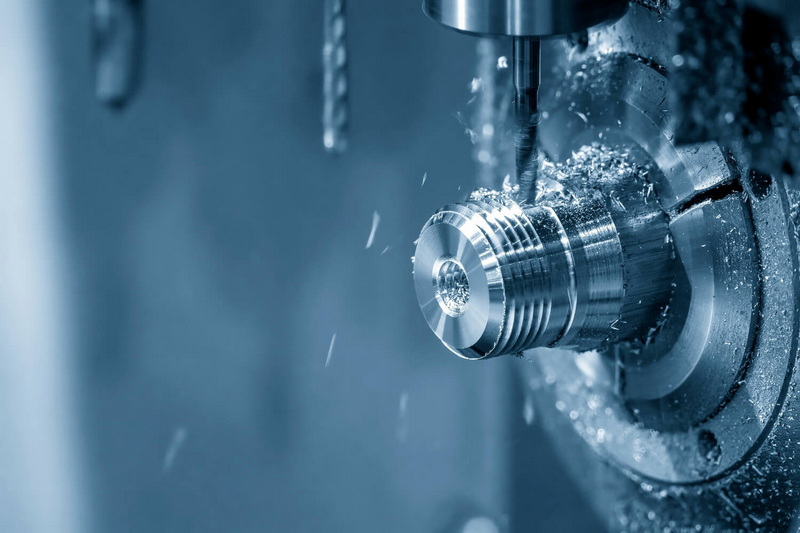
Before adopting automation, manufacturers often analyze the balance between initial investment and long-term gains. While automation requires substantial capital expenditure in robotic systems, integration software, and sensor technology, its economic advantages quickly surpass upfront costs over time.
The primary expenses include purchasing automation equipment, integration with existing CNC systems, and programming setup. Other costs may involve training staff, upgrading infrastructure, and developing custom software solutions. However, these are one-time or limited expenses, spread over the system's operational lifespan.
Once installed, automation drastically reduces ongoing operational costs. Machines can run longer hours with minimal supervision, decreasing labor costs. Energy consumption becomes more predictable due to optimized operations and reduced idle times. The productivity increase—from fewer interruptions and higher speed—leads to greater output per hour and a faster return on investment (ROI).
Defective parts result in material waste, rework time, and potential contract penalties. Automation nearly eliminates inconsistencies, ensuring first-pass accuracy. Fewer defects mean lower operational losses, faster cycle completion, and higher customer satisfaction.
Automated systems monitor machine performance continuously, giving advance notice of wear and tear before failures occur. Predictive maintenance reduces mechanical stress and prevents catastrophic breakdowns, extending machine life and reducing total maintenance expenditure.
When all factors are considered, automation typically achieves ROI within 1–3 years, depending on the production scale. Over the following years, long-term cost benefits continue as productivity and consistency remain high while manpower costs remain stable or decline.
In summary, automation not only boosts productivity but also provides measurable financial advantages, transforming manufacturing facilities into highly profitable, sustainable operations.
Despite its benefits, implementing automation presents certain challenges. Understanding these factors ensures smoother integration and better performance outcomes.
1. High Initial Investment: Automation requires capital investment in robots, controllers, and connectivity infrastructure, yet government subsidies and tax incentives in many regions can reduce the financial burden.
2. Integration Complexity: Aligning automation systems with legacy CNC machines may demand specialized technical expertise. Choosing flexible, modular designs helps streamline integration.
3. Employee Adaptation: Workers may initially resist automation due to fear of job loss. Manufacturers should emphasize retraining and upskilling programs to transition staff into more technical and analytical roles.
4. Production Flexibility: For small-batch manufacturing, rigid automation setups can reduce flexibility. Implementing adaptive robots and programmable fixtures ensures customization remains feasible.
Overcoming these hurdles leads to an advanced, reliable, and efficient production environment that consistently meets industrial demands.
The next wave of CNC machining automation is driven by artificial intelligence (AI), cloud computing, and the digital twin concept. AI-based systems will be capable of adaptive learning, adjusting parameters automatically for speed, energy efficiency, and precision.
Digital twins—a virtual replica of real-world manufacturing processes—allow simulation of machining operations before they occur. By predicting performance scenarios, engineers can make informed adjustments to minimize scrapped materials and reduce lead times even further.
In the coming decade, interconnected smart factories will dominate global manufacturing. Machines, sensors, and humans will collaborate through integrated platforms, leading to fully automated ecosystems capable of self-diagnosis, data sharing, and autonomous optimization.
Automation stands as the cornerstone of modern CNC machining, bridging the gap between traditional craftsmanship and intelligent manufacturing. Through robotics, sensors, data analysis, and software-driven control, it transforms production lines into efficient, precise, and adaptive systems.
From cost reduction and accuracy improvement to faster delivery and enhanced safety, the benefits are undeniable. While implementing automation demands strategic planning and investment, the reward is a sustainable competitive edge in global manufacturing.
As industries continue to embrace digital transformation, CNC automation will remain a critical component for maximizing productivity, ensuring quality, and shaping the future of smart manufacturing.
Contact us to get more information!
Automation increases productivity, minimizes human errors, reduces labor expenses, and ensures continuous production through smart monitoring and robotics.
Yes. Modular automation systems can scale with production needs, allowing smaller workshops to start with simple robotic loaders and expand gradually.
Integrated sensors and predictive analytics detect issues before failure, scheduling maintenance proactively to reduce downtime and extend machine life.
Operators should understand CNC programming, robotics control, and data monitoring. Continuous technical training is important for efficient system management.
Automation enables higher productivity, consistent quality, and competitiveness. Over time, smart systems evolve into self-optimizing, data-driven manufacturing networks.
1. https://www.sme.org/technologies/articles/2024/automation-in-cnc-manufacturing/
2. https://www.mmsonline.com/articles/how-automation-improves-cnc-machine-efficiency
3. https://www.manufacturingglobal.com/technology/how-automation-is-transforming-cnc-machining
4. https://www.engineerlive.com/article/benefits-of-automating-cnc-machining
5. https://www.azom.com/article.aspx?ArticleID=23110


