From idea to market-ready product, our NPI solutions make every stage easier, faster. Discover How We Help

Views: 222 Author: Tomorrow Publish Time: 2025-11-24 Origin: Site


Content Menu
● Factors Affecting CNC Turning Accuracy
● CNC Turning Tolerances and Surface Quality
● Applications Requiring CNC Turning Accuracy
● Influence of Maintenance and Operation
● CNC Turning Tolerances: Detailed Perspective
● FAQ
>> 1. What are typical CNC turning tolerances?
>> 2. How do thermal changes impact CNC turning accuracy?
>> 3. What surface finish quality can CNC turning achieve?
>> 4. Why is machine maintenance important for accuracy?
>> 5. Can CNC turning produce complex geometries?
CNC turning is a machining process where a rotating workpiece is shaped by a stationary cutting tool to produce cylindrical or conical parts with high precision. The accuracy of CNC turning is generally very high, often within ±0.0005 inches (±0.0127 mm) to ±0.001 inches (±0.0254 mm), making it a preferred method for manufacturing components that demand tight tolerances.

Many factors impact the accuracy of CNC turning. The machine's structural rigidity and precision of its motion systems, such as ball screws and linear guides, are primary contributors to maintaining dimensional stability. The spindle's ability to run true with minimal runout also directly influences achievable accuracy.
Thermal effects, stemming from heat generated through cutting and friction, cause expansion of both the workpiece and machine components, potentially distorting dimensions. Cooling systems, proper lubrication, and temperature control in the machining environment help mitigate these influences to preserve precision.
Tool wear and alignment play vital roles as well. Blunt or misaligned cutting tools can cause dimensional deviations and poor surface finishes. Regular inspection and replacement of tooling, along with accurate tool-setting procedures, support consistent accuracy. Additionally, the choice of tool material, such as carbide or diamond coatings, improves wear resistance and cutting stability.
Typical CNC turning tolerances for general applications range from ±0.005 inches (±0.127 mm), suitable for many prototype and non-critical parts, down to high-precision tolerances of ±0.0005 inches (±0.0127 mm) or better for specialty components. Ultra-precision turning can achieve tolerances as tight as ±0.0001 inches (±0.0025 mm) under controlled conditions.
Surface roughness achieved by CNC turning can vary from Ra 1.6 micrometers for roughing operations to achieving mirror-like finishes with Ra values as low as 0.04 micrometers when fine finishing techniques and tooling are employed.
Cutting parameters such as feed rate, spindle speed, and depth of cut significantly affect both tolerance and surface finish. Slower feeds and higher speeds typically enhance finish quality, while roughing passes prioritize material removal over tight tolerance control.
Many industries depend on CNC turning for its remarkable accuracy, including aerospace, automotive, medical devices, and industrial equipment manufacturing. In such applications, parts often require exact fits to ensure safety, performance, and longevity.
Repeated production runs benefit from CNC turning's consistency, minimizing variance between parts. This repeatability is crucial for assemblies where interchangeability and precise mating between components are required.
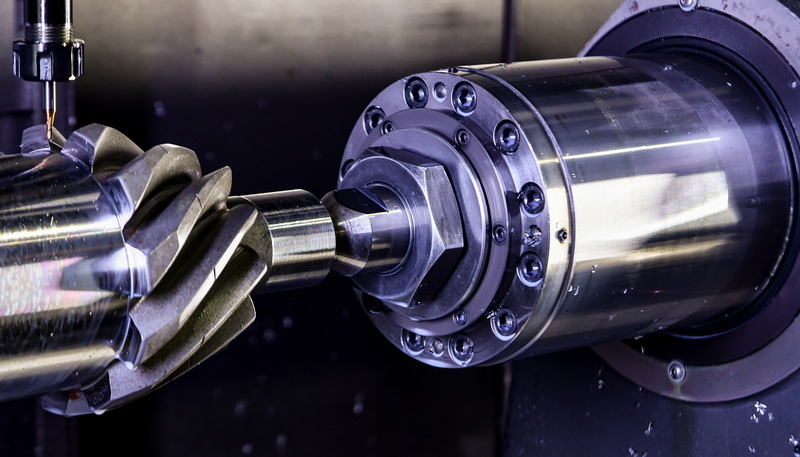
Maintaining CNC machines through regular calibration, alignment checks, and mechanical upkeep is essential to sustaining accuracy over time. Worn machine components, such as bearings or linear guides, can introduce errors if not addressed.
Operator skill in setting up jobs, calibrating tools, and programming feeds and speeds also impacts final part accuracy. Consistency in these processes ensures that the theoretical machine precision is fully realized in produced parts.
Tolerance in CNC turning defines acceptable dimensional variations from design specifications. Standard tolerances generally fall around ±0.005 inches (±0.127 mm) for metals, sufficient for many applications. For more critical parts, tighter tolerances of ±0.002 inches (±0.051 mm) or ±0.0005 inches (±0.0127 mm) are achievable with advanced equipment and processes.
Tolerance types include bilateral (permitting variation on both sides of the nominal dimension), unilateral (variation permitted on only one side), and limit tolerances (specifying upper and lower dimension limits). Geometric Dimensioning and Tolerancing (GD&T) systems help fully control the form, fit, and function through flatness, concentricity, and positional controls beyond simple linear dimensions.
CNC turning offers exceptional accuracy, typically within ±0.0005 to ±0.001 inches, supporting industries requiring precise, high-quality parts. This accuracy depends on machine condition, tooling, thermal management, operator skill, and proper process control. Tighter tolerances demand more advanced machines and careful attention but enable production of highly precise and functionally critical components.
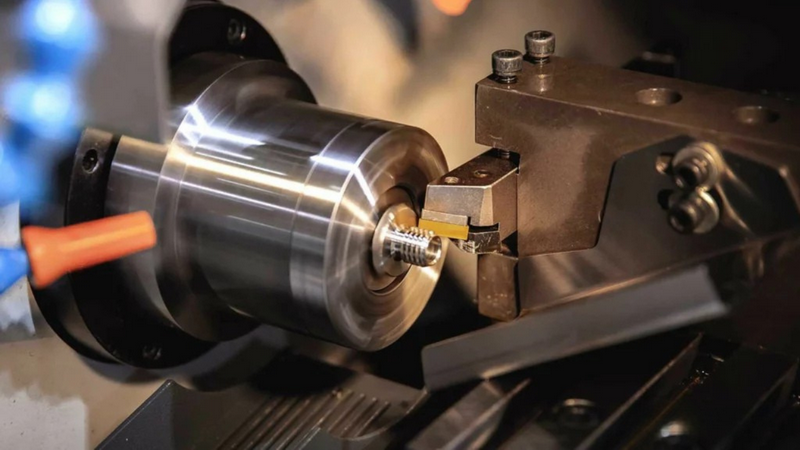
Typical CNC turning tolerances range from ±0.005 inches for general parts to ±0.0005 inches or better for high-precision components, depending on machine capability and process control.
Thermal expansion of the workpiece and machine components due to cutting heat can distort dimensions. Cooling systems and controlled environments reduce this effect to maintain accuracy.
CNC turning surfaces can range from rough finishes at about Ra 1.6 micrometers to mirror-like finishes near Ra 0.04 micrometers, depending on tool choice and cutting parameters.
Regular maintenance and calibration prevent mechanical wear and misalignment, ensuring machine components remain within design tolerances to produce accurate parts.
While primarily suited for cylindrical and conical shapes, CNC turning combined with live tooling can produce complex features such as grooves, threads, and drilling, maintaining high accuracy.
[1](https://www.makerverse.com/resources/cnc-machining-guides/guide-to-cnc-machining-tolerances/)
[2](https://www.protolabs.com/resources/design-tips/fine-tuning-tolerances-for-cnc-machined-parts/)
[3](https://www.protocase.com/resources/tolerances/cnc-machining.php)
[4](https://www.3erp.com/blog/cnc-machining-tolerances/)
[5](https://xometry.pro/en/articles/cnc-machining-tolerances/)
[6](https://fractory.com/cnc-machining-tolerances/)
[7](https://www.xometry.com/resources/machining/what-every-designer-needs-to-know-about-cnc-part-tolerances/)
[8](https://jlccnc.com/help/article/ISO-2768-Tolerance-Standards-for-CNC-Machining)
[9](https://hppi.com/knowledge-base/cnc-machining-design/tolerances)
[10](https://us.meviy.misumi-ec.com/help/en/technical_info-en-c/tup_conditions-en-c/25535/)


