From idea to market-ready product, our NPI solutions make every stage easier, faster. Discover How We Help

Views: 222 Author: Tomorrow Publish Time: 2026-01-18 Origin: Site


Content Menu
● Understanding CNC Machining Accuracy
● The Importance of Tolerances in CNC Machining
● Key Factors Affecting CNC Machining Accuracy
>> 1. Machine Structure and Calibration
>> 4. Thermal Effects and Environmental Conditions
>> 5. CNC Programming and Operator Skill
● Measuring CNC Machining Accuracy
● CNC Machining vs. Other Manufacturing Methods
● Advanced Technologies Improving CNC Accuracy
● Surface Finish and Its Relationship to Accuracy
● Achieving Precision Through Process Optimization
● Applications that Depend on CNC Accuracy
>> Medical and Dental Equipment
● Balancing Accuracy, Speed, and Cost
● Environmental and Quality Standards
● Future Trends in CNC Accuracy
● FAQ
>> 1. What level of accuracy can CNC machining achieve?
>> 2. How do temperature fluctuations affect accuracy?
>> 3. Which materials are best suited for precision CNC machining?
>> 4. Can CNC machining produce mirror finishes?
>> 5. How often should machines be recalibrated for high accuracy?
Computer Numerical Control (CNC) machining is one of the most dependable and precise methods of modern manufacturing. It has transformed production by enabling manufacturers to create incredibly detailed, repeatable, and reliable components that meet strict engineering specifications. But how accurate is CNC machining, and what determines its level of precision? Accuracy is not just a matter of machine quality; it involves hardware rigidity, software precision, operator skill, environmental control, and material behavior.
This comprehensive guide explains what CNC accuracy really means, the factors that influence it, how to measure and improve it, and why it is critical across industries. Understanding these aspects helps engineers and manufacturers ensure that every finished part meets the required tolerance level efficiently and consistently.
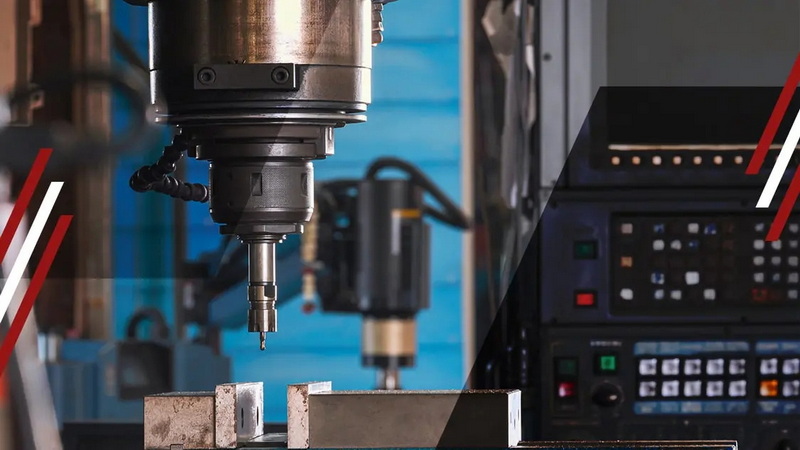
CNC machining accuracy is the measure of how closely a manufactured part matches its CAD (Computer-Aided Design) model. Accuracy is not only about producing visually correct parts—it's about achieving the exact dimensions, geometry, and surface quality required for the part to function properly in an assembly. In most modern CNC machines, the achievable tolerances generally fall within ±0.005 mm to ±0.02 mm, and ultra-precision machining can reach ±0.001 mm when environmental conditions are strictly controlled.
The precision comes from the computer-controlled operation that replaces manual control. Instead of an operator moving tools by hand, computerized instructions move machine axes, spindles, and cutting tools in perfect synchronization. The outcome is a repeatable process that minimizes human error and variation across multiple production runs.
The concept of tolerance sits at the heart of machining accuracy. Tolerance defines the acceptable divergence from a nominal measurement without compromising part function or fit. For example, a cylinder designed to fit into a hole must be within certain dimensions—too large and it won't fit, too small and it will be loose.
Tolerances can be classified into three core levels:
1. Standard tolerances (±0.1 mm to ±0.05 mm): Sufficient for most mechanical parts and prototypes.
2. Precision tolerances (±0.02 mm to ±0.01 mm): Used in automotive and aerospace parts that must function under dynamic conditions.
3. Ultra-precision tolerances (below ±0.005 mm): Common in optical, electronics, or medical applications requiring microscopic precision.
The tighter the tolerance, the higher the machine's required capability, programming accuracy, and environmental stability. However, tighter tolerances also lead to increased cost and machining time, as each step must be monitored and verified carefully.
The physical structure of a CNC machine, including the spindle head, frame, and axis guides, determines its stability. High-end machines are constructed with cast iron or granite bases that absorb vibration and resist thermal deformation. Calibration involves checking and correcting axis alignment, backlash, and tool offsets. Periodic recalibration ensures that movements remain precise across long machining cycles.
Even the sharpest cutting tools degrade over time. As tools wear, cutting forces increase and can cause dimensional drift or surface irregularities. Using durable carbide tools and implementing an automatic tool monitoring system help maintain accuracy throughout extended machining runs.
Different materials respond differently to cutting forces and heat. For example, aluminum dissipates heat quickly, making it ideal for precision machining. In contrast, titanium and hardened steels can generate significant heat, causing thermal expansion and reducing dimensional accuracy. Understanding each material's properties is essential for adjusting cutting speed, coolant flow, and tool path strategy.
Temperature variations cause expansion in both the machine and the workpiece. Even minimal changes, such as a few degrees Celsius, can affect dimensions at the micrometer level. To minimize these effects, precision machining facilities often maintain stable temperatures, humidity control, and insulation against external vibration.
Although automation reduces manual error, the accuracy of CNC machining also relies on proper programming and operator expertise. Toolpath planning, spindle speed, feed rate, and depth of cut all influence how precisely the machine produces parts. An experienced machinist can tune parameters to achieve optimal surface finish and tolerance balance.
Ensuring high accuracy requires systematic verification throughout the machining process. Modern quality inspection and metrology technologies include:
- Coordinate Measuring Machines (CMMs): Provide micrometer-accurate 3D measurements for highly complex geometries.
- Laser Interferometers: Evaluate axis motion accuracy and machine positioning errors.
- Optical Microscopes and Surface Profilometers: Measure micro-surface roughness and contour consistency.
- Go/No-Go Gauges and Calipers: Offer rapid checks for critical dimensions during production.
Parts are often inspected both in-process and after machining to ensure they remain within required specifications. Statistical Process Control (SPC) systems collect and analyze data to detect deviations early and maintain consistent quality.
CNC technology is often compared with other fabrication methods such as 3D printing, molding, and casting. Each method has unique strengths, but CNC machining stands out for its precision, repeatability, and versatility.
| Method | Typical Tolerance | Best Use Cases | Key Advantage |
|---|---|---|---|
| CNC Machining | ±0.005–0.02 mm | Metals, precision mechanical parts | High accuracy and repeatability |
| 3D Printing | ±0.1–0.3 mm | Prototyping, complex shapes | Rapid design iteration |
| Injection Molding | ±0.05–0.1 mm | Mass production | Cost-effective for large quantities |
| Die Casting | ±0.05–0.15 mm | Metal parts in volume | Good for repetitive shapes |
CNC machining remains superior when dimensional control and surface finish are priorities, particularly for components that must fit or seal precisely against other parts.
Precision continues to evolve thanks to advanced machining systems and smart manufacturing solutions.
- Five-Axis Machining: Allows multiple angles of tool movement without repositioning, reducing setup errors.
- Thermal Compensation Systems: Automatically adjust for temperature variations based on sensor feedback.
- Adaptive Toolpath Control: Uses vibration and load sensors to modify machining speed in real time.
- High-Speed Spindles and Direct Drive Motors: Increase responsiveness and reduce lag between command and motion.
- Nanometer-Level Encoders: Accurately detect axis displacement for ultra-fine positioning.
Integration with industrial automation and AI has also enabled real-time process optimization, predictive maintenance, and error correction during machining.
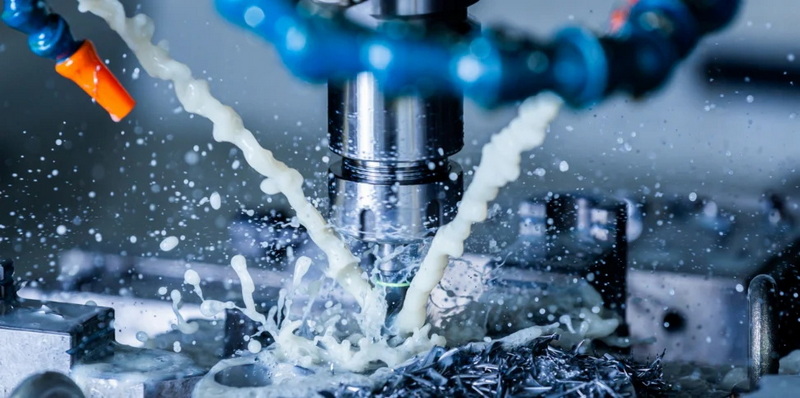
Precision is not just dimensional—it also includes surface quality. Surface roughness affects how a part performs under friction, heat, and stress. A smoother finish enhances wear resistance and improves part appearance. CNC machines can achieve surface roughness values as low as Ra 0.2 µm with the right combination of tooling and cutting parameters. Optical and medical components often require mirror-like finishes, which demand fine finishing passes using high-speed, low-feed operations or polishing tools.
To ensure consistent accuracy, manufacturers use several optimization strategies:
1. Pre-machining Analysis: Identify potential thermal and mechanical issues before production begins.
2. Toolpath Simulation: Prevent collisions and unexpected part distortion.
3. Balanced Fixturing: Secure the workpiece firmly to avoid vibration.
4. Controlled Coolant Flow: Maintain stable temperatures and flush away debris.
5. In-Process Probing: Verify dimensions mid-cycle to correct tool paths automatically.
Combining these strategies results in predictable machining performance and cost savings over time.
Some industries cannot compromise on precision, making CNC machining indispensable.
Components such as turbine blades, engine housings, and landing gear parts require ultra-tight tolerances due to high-stress environments. Even tiny errors can cause catastrophic failures during flight.
CNC machining ensures dimensional consistency for parts like pistons, brake components, and transmission systems. Precision affects both efficiency and safety.
Prosthetics, implants, and surgical instruments must exactly fit the human body. CNC machining allows for smooth surfaces that minimize bacterial growth and ensure compatibility.
Mobile phone frames, semiconductor housings, and camera lens mounts depend on sub-millimeter alignment. CNC precision ensures both mechanical fit and electrical performance.
In robotics or renewable energy systems, precise motion and friction control are crucial. Machined joints and components must function with micron-level synchronization.
Although CNC machining offers exceptional accuracy, maintaining this precision level requires careful consideration of production efficiency. Excessively tight tolerances may not always be necessary and can drive up costs due to slower feed rates, more frequent inspections, and specialized tooling. Thus, engineers typically select tolerances based on functionality rather than arbitrary specifications. The ultimate goal is achieving “fit-for-function” accuracy—precision that ensures reliable operation without unnecessary expense.
Many manufacturers pursue international quality standards such as ISO 2768, ISO 9001, or AS9100 for aerospace components. These standards define permissible tolerance ranges, material testing requirements, and process validation procedures to ensure consistent accuracy regardless of production location. Adhering to these standards guarantees global compatibility and reliability of machined components.
The future of CNC machining is shaped by artificial intelligence, automation, and digital twins. AI-driven analytics are already being integrated into modern CNC systems to predict deviations before they occur. Digital twins—virtual simulations of real machines—can test machining programs and environmental factors in real time. Furthermore, nanoscale cutting tools and hybrid manufacturing systems (combining additive and subtractive techniques) will push accuracy beyond current physical limits while enhancing efficiency.
CNC machining stands as one of the most accurate and versatile manufacturing methods in the world. Its precision capability, often reaching tolerances tighter than ±0.005 mm, ensures reliability for industries where performance and safety are non-negotiable. From aerospace turbines to medical implants, CNC machining allows engineers to achieve parts that fit perfectly, function efficiently, and last longer.
The key to maximizing accuracy lies in controlling variables such as machine calibration, tooling, environmental stability, and programming precision. As technology continues to evolve—with smarter sensors, adaptive software, and AI-driven controls—CNC machining will continue to redefine what precision truly means in modern manufacturing.
Contact us to get more information!
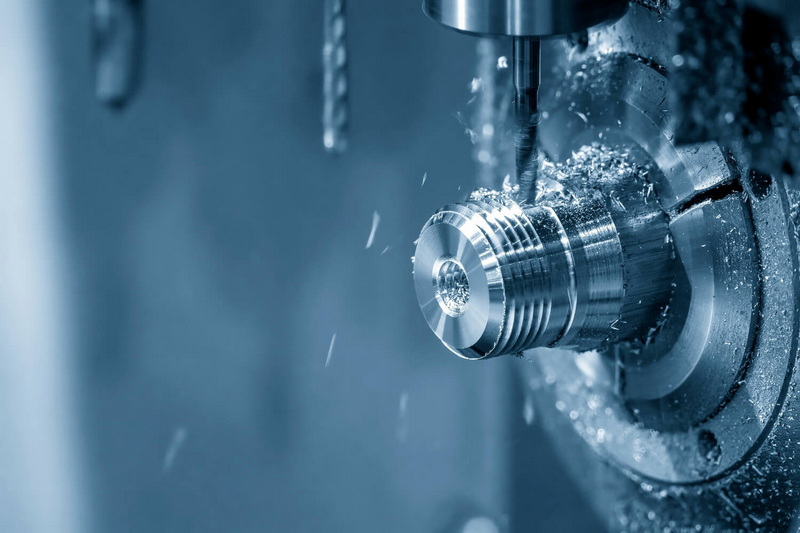
Most modern CNC machines achieve between ±0.005 mm and ±0.02 mm. Specialized precision systems can achieve even finer tolerances under controlled conditions.
Temperature changes can cause material expansion or contraction, distorting dimensions. Controlled factory environments and thermal compensation software help minimize this effect.
Aluminum, brass, and stainless steel are excellent due to their stability and predictable machining behavior. Certain engineering plastics also maintain good accuracy with proper cooling.
Yes, advanced CNC finishing techniques and fine-grit tools can achieve mirror-like surfaces, especially in metals like aluminum or titanium with proper polishing.
Calibration every three to six months is common for precision machining. For mission-critical industries like aerospace, machines may be checked monthly or even weekly.
1. https://www.engineersedge.com
2. https://www.haascnc.com
3. https://www.autodesk.com/solutions/cnc-programming
4. https://www.mastercam.com
5. https://www.machinedesign.com
6. https://www.makepartsfast.com
7. https://www.smlease.com
8. https://www.iso.org


