From idea to market-ready product, our NPI solutions make every stage easier, faster. Discover How We Help

Views: 222 Author: Tomorrow Publish Time: 2025-11-22 Origin: Site


Content Menu
● What is a CNC Milling Machine?
● Main Components of a CNC Milling Machine
>> Worktable and Axes Movement
>> Cooling and Chip Removal System
● How Does a CNC Milling Machine Work?
>> Step 2: Generating the CNC Program
>> Step 4: Loading and Running the Program
>> Step 6: Completion and Finishing
● Types of CNC Milling Machines
● CNC Milling Operations Explained
● Technical Specifications and Performance
● Applications of CNC Milling Machines
● FAQ
>> 1. What distinguishes CNC milling from manual milling?
>> 2. How is the cutting tool controlled in a CNC milling machine?
>> 3. Can a CNC mill machine any material?
>> 4. What are the benefits of 5-axis CNC milling?
>> 5. Why is coolant important in CNC milling?
CNC milling machines represent a pivotal advancement in manufacturing technology by automating the material removal process with high precision. As a computer-controlled machining method, CNC milling produces complex parts faster and with greater consistency than manual milling. This article explores in detail how a CNC milling machine operates, its key components, the process flow, types of milling machines, operations performed, technical specifications, advantages, and applications.
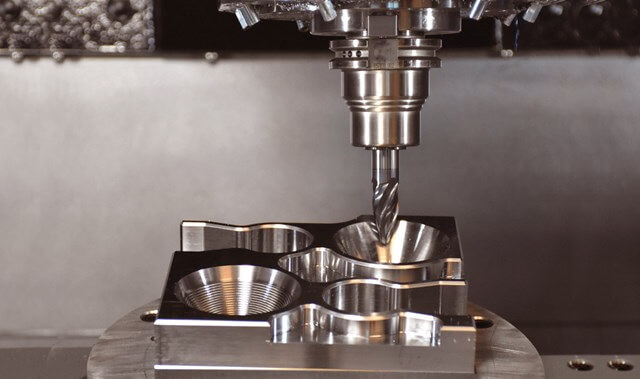
At its core, a CNC (Computer Numerical Control) milling machine is an automated machine that uses a rotating cutting tool to remove material from a workpiece fixed on a bed. The computer controller reads a CNC program—usually G-code—that commands the machine on how to move the cutting tool and worktable with exact coordinates along various axes. This capability enables the production of intricate and accurate components compared to manual machining.
The machine bed is a rigid frame that provides stability and anchors the other components. The column rises vertically from the bed and supports the spindle assembly.
The spindle is the rotating shaft that holds the cutting tool. Spindle speeds vary but typically range up to 10,000 rpm or higher in industrial machines. The tool holder secures end mills, drills, and other cutting tools, allowing quick changes.
The worktable supports and clamps the workpiece during machining. It moves precisely along the X and Y axes, while the spindle may move vertically on the Z axis. Advanced machines can include 4th and 5th rotary axes enabling multi-directional machining.
Servo motors receive commands from the CNC controller and move the spindle or table along designated paths with micron-level accuracy. High-quality ball screws and linear guideways ensure smooth motion.
The CNC controller functions as the “brain” of the machine. It interprets the G-code program generated from CAD/CAM software, continuously directing tool paths, spindle speed, feed rate, and coolant flow.
A cooling system sprays cutting fluid to reduce heat and friction at the cutting interface, increasing tool life. Concurrently, chip removal systems clear metal shavings from the cutting area to prevent interference.
The process begins with creating a detailed 2D or 3D design of the desired part using CAD (Computer-Aided Design) software. Designers precisely define dimensions and features according to specifications.
The CAD file is imported into CAM (Computer-Aided Manufacturing) software that converts the design into a CNC program. This program, commonly written in G-code, contains all instructions for tool movement, spindle speed, feed rates, and tool changes.
Operators mount the raw material or workpiece securely on the worktable using fixtures or clamps. The appropriate cutting tool is loaded into the spindle, and machine coordinates are set, establishing the zero or home point.
The CNC program is uploaded to the controller. When the operator starts the machine, the controller sends signals to the servo motors and spindle, executing the toolpath described in the G-code.
The cutting tool rotates at high speed and moves along programmed paths, removing material layer by layer to shape the workpiece. The machine can mill surfaces, pockets, slots, holes, or complex contours with multiple axes of control.
After machining, the part is removed for inspection. Additional finishing steps such as deburring, polishing, or coating may follow depending on the application requirements.
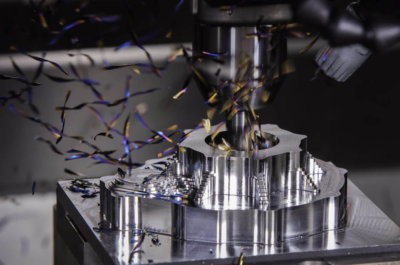
3-Axis CNC Mills: The most common type, moving cutting tools in the X, Y, and Z directions, suitable for flat and moderately complex parts.
4-Axis CNC Mills: Include rotation along a fourth axis (often rotary table) enabling machining of circular features and more complex components.
5-Axis CNC Mills: Allow simultaneous movement along five axes (3 linear + 2 rotary). Essential for highly complex parts with undercuts and compound angles.
Face Milling: Removes material from a large flat surface, producing smooth finishes.
Peripheral Milling: Cuts vertical surfaces by moving the workpiece along the tool axis.
Slotting: Creates grooves or channels within the workpiece.
Drilling and Boring: Produces precise holes of various diameters and depths.
Contour Milling: Machines complex 3D curves and shapes.
Thread Milling: Forms threaded features on holes or surfaces.
CNC milling machines vary widely in size and power. A typical industrial 3-axis vertical mill may have:
- Worktable size: 600-1200 mm length and 400-800 mm width
- Axis travel: X=700-800 mm, Y=600-700 mm, Z=300-450 mm
- Spindle speed: Up to 10,000-12,000 rpm
- Spindle power: 7 kW or higher
- Tool changer capacity: 15-30 tools
- Feed rate: Rapid traverse speeds of 20-30 m/min
- Positioning accuracy: ±0.007 mm or better
- Repeatability: ±0.005 mm or better
Advanced 5-axis machines offer larger axes travel, faster rotation speeds on rotary axes (up to 2000 degrees per minute), and enhanced control systems with high-speed look-ahead capability to optimize tool paths for complex geometries.
Precision: CNC mills consistently maintain tight tolerances impossible to achieve manually.
Automation: Reduces human error and operator fatigue.
Versatility: Capable of machining a vast array of materials including metals, plastics, composites, and wood.
Repeatability: Identical parts can be produced in large quantities without variance.
Complexity: Enables intricate geometry and undercuts.
Efficiency: Higher speeds and multitasking capabilities shorten production cycles.
- Aerospace: Turbine blades, structural components.
- Automotive: Engine parts, molds, fixtures.
- Electronics: Enclosures, heat sinks.
- Medical: Implants, surgical tools.
- Prototyping: Fast development and testing of new designs.
- Tool and Die Making: Molds, patterns, dies.
A CNC milling machine works by combining computer programming with mechanical precision to automate the removal of material and produce complex, high-accuracy parts. Through CAD/CAM integration, multi-axis control, and advanced servo technology, CNC milling enables manufacturers to achieve repeatable, efficient, and flexible production across a wide range of industries. With continuous advancements in machine speeds, control systems, and tooling, CNC milling remains at the forefront of manufacturing innovation.
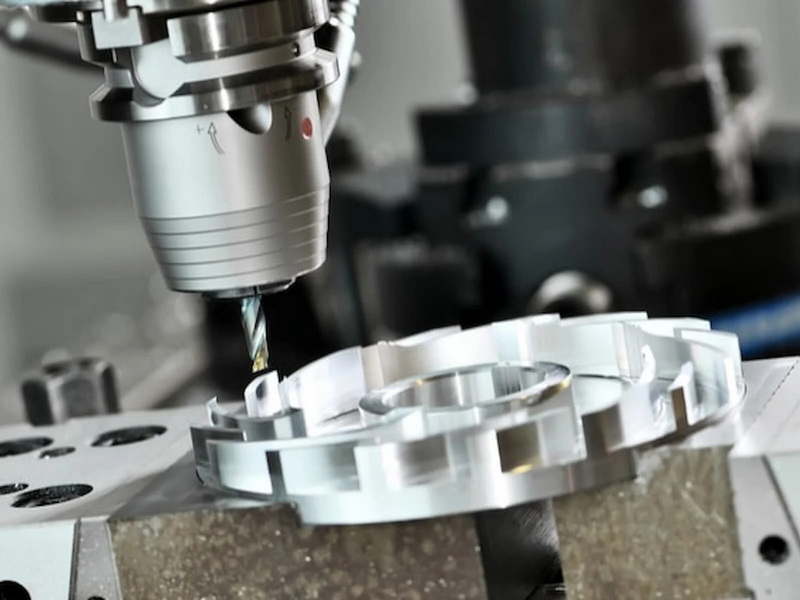
CNC milling uses computer programs to control tool movements automatically, offering superior precision, speed, and repeatability compared to manual control which depends on operator skill.
The CNC controller sends precise commands to servo motors that move the spindle and worktable along programmed paths in multiple axes, rotating the cutting tool at specified speeds.
Yes, CNC mills can machine metals like aluminum, steel, titanium, as well as plastics, composites, and wood, using different cutting tools and parameters suited to each material.
5-axis machines allow simultaneous movement on five axes, enabling complex parts with undercuts and contours that can't be machined on simpler mills, improving accuracy and reducing setup times.
Coolant reduces heat generated during cutting, extending tool life and maintaining part surface quality. It also aids chip removal from the cutting zone.
[1](https://www.csir.co.za/sites/default/files/Documents/CNC%20Milling%20Machine%20-%20Annexure%20A%20-%20Technical%20specifications.pdf)
[2](https://cncwmt.com/product/xh7126/)
[3](https://www.cncmasters.com/baron-milling-machine/)
[4](https://alimco.in/WriteReadData/UserFiles/file/CNC%20machine.pdf)
[5](https://hppi.com/knowledge-base/cnc-machining/cnc-milling)
[6](https://tormach.com/machines/mills.html)
[7](https://www.langmuirsystems.com/mr1)
[8](https://tormach.com/machines/mills/1100m.html)
[9](https://www.uti.edu/blog/cnc/milling)
[10](https://www.makerverse.com/resources/cnc-machining-guides/cnc-milling-everything-you-need-to-know/)


