From idea to market-ready product, our NPI solutions make every stage easier, faster. Discover How We Help

Views: 222 Author: Tomorrow Publish Time: 2025-12-28 Origin: Site


Content Menu
● Understanding CNC Milling and Its Modern Role
● Cuesta College and Its Manufacturing Technology Department
>> Department Mission and Training Philosophy
● CNC Machine Courses Offered at Cuesta College
>> Core Courses
● What Students Learn in CNC Milling Courses
● Facilities, Equipment, and Learning Environment
● Certificates, Degrees, and Career Pathways
● Admission Process and Enrollment Tips
● Benefits of Studying CNC at Cuesta College
● Connection Between CNC Technology and Industry 4.0
● Real-World Applications and Student Projects
● Financial Aid and Continuing Education
● FAQ
>> 1. What is the duration of CNC milling classes at Cuesta College?
>> 2. Do I need prior experience to enroll?
>> 3. Which software platforms are covered?
>> 4. Can students earn a degree or certificate?
>> 5. What kinds of jobs can graduates expect?
Computer Numerical Control (CNC) machining represents one of the most important technologies driving modern manufacturing. From aerospace engineering to precision medical tooling, CNC systems convert digital designs into tangible industrial products with accuracy that human operators alone could never match. As industries continue to automate production lines and demand skilled technicians, individuals trained in CNC milling and programming have gained substantial career advantages.
For those seeking hands-on education and certification in California, Cuesta College has emerged as a respected training destination. This article examines whether Cuesta College offers CNC milling machine classes, explores the details of its manufacturing programs, and explains why this community college is a strong choice for students pursuing a career in machining or industrial technology.

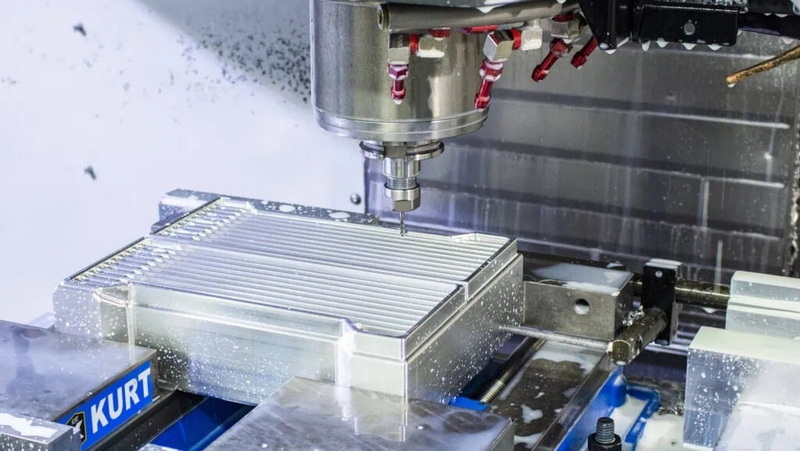
CNC milling is a method of removing material from a workpiece using computer-controlled rotary cutters. Unlike conventional milling—where the machinist manually adjusts feed rates and angles—CNC milling follows exact programmed paths in three or more axes. This automation allows for the creation of intricate designs, rotational symmetry, and micro-level precision.
Modern industries benefit from CNC milling technology in several fields:
- Aerospace manufacturing for producing turbine blades and fuselage components.
- Medical device fabrication including orthopedic implants and surgical tools.
- Automotive design for producing engine blocks, gears, and prototype parts.
- Electronics manufacturing where compact, high-tolerance housings are required.
- Renewable energy systems, such as precision-machined wind turbine hubs.
California's Central Coast continues to attract advanced manufacturing firms due to its growing technical workforce and access to educational institutions like Cuesta College that offer tailored machining curricula.
Cuesta College, part of the California Community College system, is known for its balance of academic rigor and vocational training. Its Manufacturing Technology (MT) Department belongs to the broader Career Technical Education (CTE) division. This department provides structured programs focused on preparing students for technical industries that require both analytical problem-solving and mechanical aptitude.
The department's primary mission is to prepare students for sustainable employment through:
- Applied instruction: Emphasis on hands-on practice rather than purely theoretical coursework.
- Industry alignment: Courses are frequently revised to meet current California manufacturing standards and technological innovations.
- Student empowerment: The department nurtures career-ready confidence by combining classroom learning with real fabrication experience.
Students not only learn how to operate machinery but also how to think critically about design optimization, production efficiency, and quality control.
---
So, does Cuesta College have CNC milling machine classes?
Yes—Cuesta College offers a robust sequence of CNC and machining courses through its Manufacturing Technology program. The program incorporates both introduction-level and advanced coursework that focuses on CNC mills, lathes, and programming.
1. MT 220 – Introduction to CNC Machine Operations
Students learn machine setup, coordinate systems, tool offsets, and elementary G-code writing. They spend time operating both CNC milling centers and CNC lathes.
2. MT 221 – Advanced CNC Programming and Operation
This class covers multi-axis machining, subprogram applications, and coordinate rotation. It also introduces fixture design and quality assurance fundamentals.
3. MT 222 – Computer-Aided Manufacturing (CAM)
Emphasizing modern software tools, this course teaches students to transition digital designs into machined products using CAM programs such as Mastercam and Fusion 360.
4. MT 223 – CNC Milling Projects
Designed as a capstone, students fabricate components through independent or team-based milling projects. Through this, they refine their programming and machining accuracy.
5. MT 225 – Manufacturing Processes and Materials
This course provides foundational understanding of different materials, including metals, plastics, and composites, and how they respond to machining operations.
Together, these classes build comprehensive knowledge in machining principles, precision measurement, programming, and production management.
Cuesta College's CNC milling machine classes are structured so that theoretical learning directly supports laboratory practice. Students continually cycle between classroom concepts and active machine operations.
- Machine operation and maintenance: Understanding CNC machine startup, calibration, and troubleshooting.
- Programming logic: Writing, editing, and simulating G-code programs to control cutter paths and spindle speeds.
- Blueprint interpretation: Translating design intent from technical drawings into machinable operations.
- Tooling and measurement: Selecting appropriate cutting tools, jigs, and gauges for high-tolerance manufacturing.
- CAM integration: Using computer-aided manufacturing software to streamline project workflows.
This approach gives students a deep understanding of the entire production pipeline—from digital modeling to post-processing inspection.
Cuesta College takes pride in maintaining state-of-the-art machining laboratories where students interact directly with the same platforms used in industrial plants.
- HAAS CNC vertical milling centers capable of three- and four-axis operations.
- Conventional mills and lathes for manual machining skills.
- 3D printers for additive-subtractive hybrid manufacturing projects.
- Precision inspection instruments including dial indicators, micrometers, and CMMs (Coordinate Measuring Machines).
- CAD/CAM computer stations equipped with licensed professional software.
Instructors often design lab assignments that replicate industry challenges—such as achieving ±0.001-inch tolerance or machining complex pocket geometries—so that students experience actual production conditions.

Students enrolled in Cuesta's manufacturing programs can pursue either a Certificate of Achievement or an Associate in Science (A.S.) degree.
- Certificate of Achievement – CNC Machining: Focused on the foundational to advanced use of CNC milling and turning centers.
- Certificate of Achievement – Manufacturing Technology: Covers a broad technical base for those seeking flexibility across industrial environments.
- Associate of Science in Manufacturing Technology: Includes general education courses plus advanced manufacturing specialization.
Graduates of these programs find employment in:
- CNC machining centers and production facilities.
- Prototype and R&D shops.
- Aerospace and automotive part suppliers.
- Tool-and-die manufacturing companies.
- Precision medical and electronics production facilities.
Job titles include CNC Operator, CNC Programmer, Manufacturing Technician, Quality Assurance Inspector, and Maintenance Machinist.
According to California labor data, skilled CNC machinists can expect strong job demand with competitive wages averaging between $27 and $38 per hour, depending on specialization.
Cuesta College maintains an open admission policy typical of California community colleges, making the program highly accessible.
1. Apply online through the [Cuesta College Admissions Portal](https://www.cuesta.edu).
2. Complete new student orientation and meet with an academic counselor.
3. Register for Manufacturing Technology courses during the open enrollment window.
4. Obtain necessary tools and safety gear, such as safety glasses and steel-toed shoes, for lab participation.
While no prior experience in machining is required, experience in drafting, mathematics, or mechanical systems is beneficial. Many adult learners and veterans also join the program to re-skill for modern technical careers.
Several key aspects make Cuesta College's CNC training exceptional compared to similar community programs:
- Industry-Experienced Faculty: Instructors possess decades of combined experience in aerospace and mechanical systems, bringing real manufacturing scenarios to the classroom.
- Small Class Sizes: Students receive direct mentoring during lab sessions.
- Hands-On Emphasis: Over half of instructional time occurs in workshop settings.
- Local Partner Network: Cuesta collaborates with regional employers to arrange internships and job placement programs.
- Affordable Tuition: Community college tuition remains significantly lower than private technical school costs.
Through these advantages, Cuesta builds both technical skill and workplace readiness.
Cuesta College recognizes that the manufacturing world is moving toward Industry 4.0, characterized by interconnectivity, automation, and smart data usage. Students learn how traditional machining integrates with digital monitoring systems.
Subjects such as Industrial Internet of Things (IIoT), sustainable manufacturing, and smart sensors are gradually incorporated into course discussions. This ensures graduates can adapt to changing environments, where machines communicate in networks and production lines optimize themselves in real time.
A highlight of Cuesta's CNC program is the opportunity for project-based learning. Students complete a series of machining assignments that culminate in real production pieces such as:
- Custom mechanical fixtures.
- Aluminum or steel machine components.
- Decorative or prototype parts for local community partners.
- Collaborative team projects combining design, machining, and quality testing.
These projects are designed to replicate the full engineering workflow. Students often document their process—from model design to final inspections—creating an impressive professional portfolio to present to future employers.
Cuesta College supports diverse learners through an accessible tuition structure and multiple financial assistance options.
Students may qualify for:
- Federal student aid (FAFSA).
- California College Promise Grant (formerly BOG Fee Waiver).
- Scholarships from local industry organizations and manufacturers.
Furthermore, Cuesta's Community Programs division periodically hosts intensive short courses and weekend workshops for professionals seeking skill upgrades in CNC programming or CAD/CAM integration. These continuing education opportunities ensure that alumni can keep pace with evolving technology.
So, does Cuesta College have CNC milling machine classes? Absolutely. The college offers a strong lineup of CNC-focused courses taught by industry professionals in a supportive learning environment. Students train with advanced machining equipment, learn cutting-edge programming techniques, and develop confidence through applied lab experience.
By combining theory with extensive hands-on instruction and aligning its programs with modern industrial needs, Cuesta College ensures graduates are ready for well-paying positions in the thriving advanced manufacturing sector. Whether you seek short-term certification or a full associate degree, Cuesta offers the technical foundation to machine your future success.
Most classes operate on a 16-week semester schedule. Certain short-format or intensive workshops are available during summer or winter terms for accelerated learning.
No previous machining experience is required for introductory courses. The Manufacturing Technology program is structured to teach beginners the fundamentals before advancing into programming and technical machining.
Students gain experience with Mastercam, Fusion 360, and SolidWorks CAM—leading programs used in the industry for generating CNC tool paths and part simulations.
Yes. Cuesta awards both Certificates of Achievement and Associate of Science degrees in Manufacturing Technology with CNC machining emphasis, which are recognized by employers statewide.
Graduates are qualified for roles such as CNC Machinist, CNC Programmer, Production Technician, and Quality Control Specialist in sectors like aerospace, automotive, and high-precision component manufacturing.


