From idea to market-ready product, our NPI solutions make every stage easier, faster. Discover How We Help

Views: 222 Author: Tomorrow Publish Time: 2025-11-29 Origin: Site


Content Menu
● A Look Back: Amazon's 2016 3D Printing Experiment
● Why That Early Service Struggled
● Amazon Today: Marketplace For 3D Printers And Prints
● Using 3D Printing To Launch Products On Amazon
● Building A 3D Print Farm For Amazon Sales
● Fulfillment By Amazon (FBA) For 3D Printed Products
● Does Amazon Print Anything Itself?
● Future Vision: On Demand Manufacturing In Fulfillment Centers
● When 3D Printing Makes Sense For Amazon Sellers
● Limits Of 3D Printing For Mass Amazon Sales
● How Buyers Can Find 3D Printed Products On Amazon
● Alternatives For Direct 3D Printing Services
● FAQ
>> 1. Does Amazon currently offer an upload and print 3D printing service?
>> 2. Can I sell my 3D printed products on Amazon?
>> 3. What happened to Amazon's original 3D printing store?
>> 4. Is Amazon exploring industrial 3D printing for logistics?
>> 5. What are good alternatives if I need custom 3D prints from my own design?
Amazon's involvement in 3D printing is best understood as an ecosystem rather than a single service. The company enables sellers to create and scale 3D printing businesses, but it does not generally receive individual CAD files from consumers for direct printing. Most of the 3D printing activity connected to Amazon happens either before products reach Amazon warehouses or outside the platform entirely, with Amazon mainly handling product discovery and logistics.[2][1]
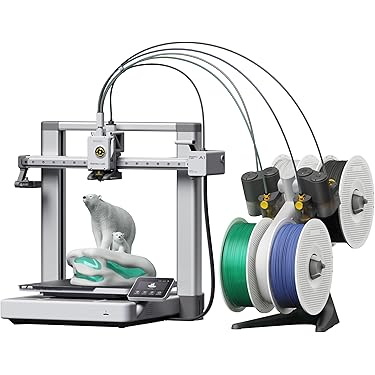
In 2016, Amazon launched a dedicated 3D printing store that allowed customers to customize products such as bobbleheads and small figurines. Buyers could choose attributes like hair color, accessories, and other details, and a partner print provider used 3D printing (including full color sand based processes) to manufacture the final items. Despite the hype, this store lasted only a few months before being shut down, indicating that consumer level demand and technology readiness were not yet aligned with Amazon's scale.[1]
The early service faced two main challenges. First, the customer experience required people to “design” or heavily customize products, which many mainstream shoppers found confusing or unnecessary for everyday purchases. Second, 3D printing at that time lacked the reliability, speed, and low cost needed to support large scale retail volumes, so even strong interest would have been hard to serve efficiently. As a result, the experiment remained a niche novelty rather than becoming a core Amazon offering.[1]
Today, Amazon hosts thousands of listings for:
- Desktop and professional 3D printers.
- Filaments, resins, spare parts, and upgrade kits.
- 3D printed consumer products such as décor, accessories, mounts, organizers, and hobby items.[4][2]
In this environment, sellers run the actual printers and manage production, while Amazon provides search visibility, reviews, payment processing, and often fulfillment. This division allows each side to focus on its strengths: makers handle design and manufacturing, and Amazon handles traffic and logistics.[2]
Many entrepreneurs use 3D printing to design and validate ideas before committing to expensive tooling. Sellers interviewees describe using 3D printers to prototype products, gather feedback, and even sell low volume versions on Amazon Handmade or standard listings to test demand. Only after confirming real market interest do they invest in injection molds or large scale manufacturing, keeping the initial risk much lower than if they had gone straight to mass production.[2]
Some businesses evolve from a single printer at home into full “print farms” that supply Amazon and other channels. A typical path is:
- Start with one or two printers to prove the concept and optimize the design.
- Scale up to dozens of printers running nearly continuously once demand is validated.
- Use Amazon listings and ads to reach more customers while refining production workflows.[3][6]
Reports from the 3D printing community highlight examples of print farms with dozens of machines originally built to support Amazon and online sales. These operations focus on specific product niches, tight quality control, and fast turnaround to maintain strong ratings and repeat purchases.[6][3]
Fulfillment by Amazon is a key enabler for 3D printing brands that prefer not to ship each order themselves. Sellers typically:
- Print and perform quality checks on products in their own facilities.
- Package items to meet Amazon's labeling and packaging guidelines.
- Send batches of inventory to Amazon's warehouses, where Amazon stores, picks, packs, and ships orders to customers.[2]
This model lets 3D printing businesses combine flexible, on demand manufacturing at their own sites with Amazon's fast shipping and Prime eligibility, which can significantly increase conversion rates. However, sellers must carefully calculate FBA fees and storage costs because bulky or slow moving 3D printed items can erode margins.[2]
Public information points to Amazon primarily acting as a marketplace rather than as a direct 3D print provider. There are patents and concept discussions about ideas like mobile 3D printing trucks or on site printing inside delivery vehicles or warehouses, but these remain conceptual or experimental rather than mainstream services advertised to consumers. Any internal use of 3D printing (for prototypes, spare parts, or process tools) is not marketed as a retail “3D printing service” for customers.[9][1]
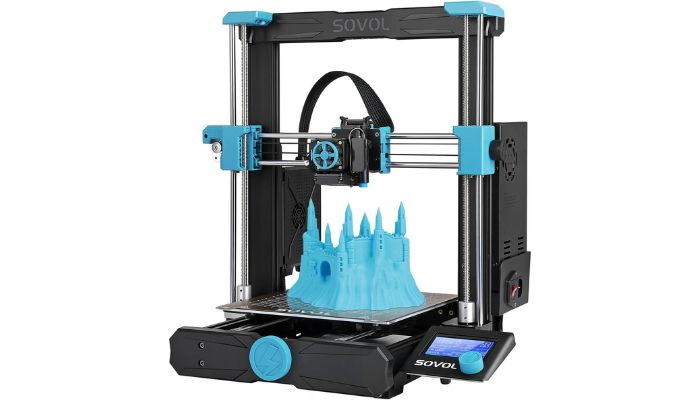
Industry analyses suggest a logical future step where Amazon integrates large industrial print farms directly into fulfillment centers. In such a model:
- Popular or long tail parts would exist as digital files instead of physical inventory.
- Printers inside or near warehouses would produce items only when orders arrive.
- Finished parts would join normal picking and packing flows, reducing storage and obsolescence risks.[1]
Commentary from print farm operators indicates that APIs already exist that could connect digital catalogs to fleets of printers, enabling external print farms to serve Amazon or similar platforms on demand. If adopted widely, this approach could blur the line between “inventory” and “manufacturing,” turning some products into purely digital SKUs until the moment of production.[1]
For Amazon sellers, 3D printing is particularly attractive in situations such as:
- Niche or low volume markets where molds would be too expensive.
- Products that need frequent design changes or customization.
- Early stage proof of concept runs before full scale manufacturing.[6][2]
Sellers share experiences of going through dozens of iterations to refine their product, using 3D printing to quickly test and improve designs until they are robust enough for everyday use. This iterative process would be far slower and more costly if every change required new tooling.[6]
Despite its flexibility, 3D printing is not a magic solution for every Amazon product. Challenges include:
- Higher unit cost compared with high volume molding for mature products.
- Slower production speed when demand spikes beyond printer capacity.
- Need for careful post processing, quality checks, and consistent material sourcing.[4][2]
Experiments that compare Amazon bought products with 3D printed equivalents show that while 3D printing can match or beat cost in some custom or complex designs, mass produced items often remain cheaper when ordered directly as finished goods from Amazon. Sellers therefore must choose product categories where additive manufacturing's flexibility outweighs these drawbacks.[4]
Shoppers who want items made by 3D printing can:
- Search with terms such as “3D printed bracket,” “3D printed mount,” or “3D printed décor.”
- Use Amazon Handmade or small brand categories that commonly feature 3D printed objects.
- Check product descriptions and images for mentions of “3D printed,” “additive manufacturing,” or specific materials often used in desktop printing.[4][2]
These approaches help distinguish genuinely printed products from standard injection molded or machined goods. Customer reviews often reference the feel, layer lines, or finish typical of 3D printed parts, which can also guide expectations.[4]
If the primary goal is to upload a CAD file and receive a printed part, specialized 3D printing services remain the most straightforward solution. These services typically:
- Accept standard file formats such as STL, STEP, or OBJ.
- Provide instant quoting based on material, process, and volume.
- Offer technologies beyond typical consumer printers, including industrial SLS, MJF, SLA, and metal printing.[1]
Some of these providers integrate with e commerce systems so that sellers can bridge from custom 3D printing to Amazon or other marketplaces once a design is validated. This hybrid strategy leverages dedicated print capacity and Amazon's enormous audience without requiring Amazon itself to operate a 3D printing bureau.[1]
Amazon does not currently run a general public 3D printing bureau where everyday users upload 3D models for Amazon to print and ship directly. Instead, Amazon focuses on powering an ecosystem: it supplies a marketplace for 3D printers, materials, and 3D printed products, while independent makers and print farms handle design and fabrication, often using programs such as FBA to scale. For buyers seeking custom printed parts from their own files, dedicated 3D printing services are still the primary choice, although future integration of industrial print farms into Amazon's logistics network could eventually bring more direct, on demand manufacturing options.[3][2][1]
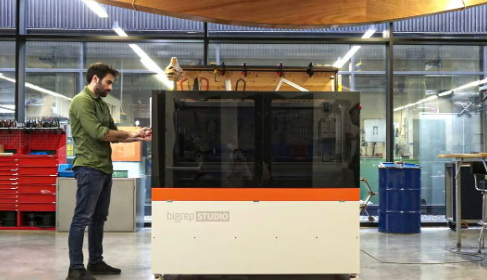
No. Amazon does not provide a mainstream service where you upload a 3D file and Amazon itself prints and ships the part under its own 3D printing brand. Instead, you buy 3D printers, supplies, or finished 3D printed products sold by third party merchants on the platform.[1]
Yes. You can register as a seller, list your 3D printed products, and choose either merchant fulfilled shipping or Fulfillment by Amazon. Many entrepreneurs use 3D printing to prototype, validate, and then sell products via Amazon, scaling production as demand increases.[6][2]
Amazon's dedicated 3D printing store, launched around 2016, focused on customizable items such as bobbleheads but was closed after a few months. Limited consumer demand, complex customization flows, and technology limitations at that time contributed to its shutdown.[1]
Public sources and industry commentary describe concepts where Amazon or partners might integrate large print farms into fulfillment centers to produce parts on demand, potentially via APIs that connect digital catalogs to printer fleets. However, these ideas remain largely conceptual and are not marketed today as a standard service to retail customers.[1]
Dedicated 3D printing bureaus and on demand manufacturing platforms are the most direct option if you want to upload a CAD file and receive printed parts. They support professional materials and processes, provide instant quoting, and often integrate with e commerce so that validated designs can later be sold on Amazon or other marketplaces.[1]
[1](https://www.youtube.com/watch?v=1Qtw8SoL3u0)
[2](https://www.youtube.com/watch?v=Qwt_uK8CNQc)
[3](https://www.facebook.com/PrusaResearch/posts/what-started-as-a-simple-amazon-experiment-quickly-grew-into-a-full-blown-3d-pri/760677603140972/)
[4](https://www.youtube.com/watch?v=XXzjjaXnyfo)
[5](https://www.youtube.com/watch?v=XMJ39TTXuvQ)
[6](https://www.reddit.com/r/3Dprinting/comments/17yg8rj/my_experience_selling_3d_printed_products_on/)
[7](https://www.reddit.com/r/3Dprinting/comments/1gwqiah/dhs_admits_to_monitoring_3d_printer_purchases/)
[8](https://blog.prusa3d.com/amazon-cars-repairing-classic-volvos-with-3d-printing_92742/)
[9](https://www.youtube.com/watch?v=SkxKF2cxHgY)
[10](https://www.youtube.com/watch?v=LFQafATkj-A)


