From idea to market-ready product, our NPI solutions make every stage easier, faster. Discover How We Help

Views: 222 Author: Tomorrow Publish Time: 2025-12-22 Origin: Site


Content Menu
● Understanding Magnetic Materials
● How CNC Milling Interacts With Magnetic Materials
● Material Considerations in Magnetic Machining
● Tooling Strategies for Milling Magnetic Materials
● Cooling and Lubrication Techniques
● Workholding Challenges and Solutions
● Machine Maintenance and Chip Management
● Advanced Approaches and Technologies
● Industry Applications of CNC Milling Magnetic Metals
● Environmental and Safety Considerations
● Machining Parameters and Performance Optimization
>> Advantages
>> Limitations
● Future Prospects in Milling Magnetic Materials
● FAQ
>> 1. Can all CNC machines handle magnetic materials?
>> 2. What precautions are needed for magnetic chips?
>> 3. How do I keep coolant uncontaminated when machining magnetic metals?
>> 4. Can heat during milling demagnetize the material?
>> 5. Which industries benefit most from machining magnetic materials?
CNC milling machines have revolutionized manufacturing by providing speed, precision, and repeatability. Whether it's shaping aircraft components or fabricating intricate molds, CNC mills have become the backbone of modern production. However, when it comes to magnetic materials, machinists often wonder whether these materials can be effectively and safely cut.
This question is important not only for those dealing with ferromagnetic metals but also for engineers working on alloys used in electrical and mechanical systems where magnetism is a key property. The short and reliable answer is: Yes, CNC milling machines can cut magnetic materials. Yet, this capability depends on proper tooling, machining parameters, and strategies to manage magnetism's unique challenges.

Magnetic materials are substances that respond strongly to magnetic fields or can become magnetized themselves. These materials vary greatly in their magnetic behavior, strength, and machinability. To understand how they behave under CNC milling conditions, let's categorize them more precisely.
- Ferromagnetic materials: These strongly magnetic materials include iron, cobalt, nickel, and most steels. They easily magnetize and maintain their magnetization.
- Paramagnetic materials: Weakly attracted by magnetic fields—examples include aluminum, titanium, and magnesium. They exhibit minimal interference during milling.
- Diamagnetic materials: Slightly repelled by magnetic fields, such as copper, silver, and graphite. They pose little to no issue during machining.
The focus in this discussion is primarily on ferromagnetic materials, as they can create machining challenges like tool clogging and magnetic debris buildup.
CNC milling machines operate by rotating a cutting tool and precisely moving it along programmed paths to remove material. The machine interprets numerical instructions (G-code) to execute cuts across multiple axes.
When magnetic materials enter the picture, that process faces some complications:
1. Magnetic interference – Magnetic forces can attract small ferrous chips back toward the workpiece or tool, disrupting the cutting and causing inconsistent surface finishes.
2. Tool and fixture attraction – Magnetic parts or chips can cling to tool holders and spindles, creating extra drag or vibration.
3. Coolant contamination – Fine metallic dust may accumulate in coolant systems, leading to clogging or reduced coolant efficiency.
4. Precision reduction – Magnetism can cause minor positional inaccuracies if the part attracts measurement devices or causes sensors to misread locations.
Nevertheless, these issues are manageable when appropriate preventive measures are taken.
The chemical makeup of a material decides both its machinability and its magnetic strength. For example:
- Low-carbon steels are relatively easy to mill even when magnetic.
- Tool steels and nickel-based alloys may require specialized cutters due to their hardness and sticky chips.
- Cobalt-chromium alloys are even tougher, demanding reduced cutting speeds and advanced tool coatings.
Knowing whether a material maintains permanent magnetism or only exhibits temporary magnetization during handling helps select the right machining environment.
Heat treatment alters a material's microstructure and, consequently, its magnetism. Hardened or tempered steels might retain or lose magnetic strength depending on their transformation temperatures. When heat-treated materials are machined, temperature management becomes vital because excessive heat can demagnetize or distort the piece.
The cutting tool is the heart of any milling process, and its characteristics directly affect machining efficiency. When dealing with magnetic materials:
- Use carbide or coated carbide tools: Titanium aluminum nitride (TiAlN) or aluminum chromium nitride (AlCrN) coatings resist wear and build-up.
- Sharp cutting edges: Prevent heat accumulation and material dragging.
- Positive rake angles: Improve chip removal dynamics.
- Proper flute geometry: Two or three flutes often work best for materials prone to clogging.
For extremely hard magnetic alloys, PCBN (Polycrystalline Cubic Boron Nitride) tools might be used, especially in finishing passes.
Magnetic materials tend to generate frictional heat because they often have high density and hardness. Thus, coolant and lubrication become essential to avoid tool degradation or structural changes in the material.
- Flood coolant systems—directing a consistent stream toward the cutting zone—is optimal.
- Chilled water-based coolants containing anti-rust agents help control magnetized debris.
- High-pressure coolant jets can eject metallic particles that otherwise cling due to magnetism.
- Oil mist or MQL (Minimum Quantity Lubrication) systems also work but must be carefully designed to avoid chip adhesion.
Maintaining coolant purity is critical; contaminated coolant can recirculate magnetized chips, decreasing part quality.
Traditional magnetic chucks are effective when machining nonmagnetic workpieces. But when your material is already magnetic, using a magnetic chuck can actually interfere with precision. To mitigate this issue:
- Use mechanical clamping systems such as vises or T-slot fixtures.
- Employ soft jaws made from nonmagnetic metals like aluminum or brass.
- Implement vacuum tables for smaller or thinner magnetic parts.
- Demagnetize the workpiece before clamping to eliminate residual attraction forces.
After machining, these parts can be remagnetized easily if their magnetic properties are functionally required.
Machining magnetic materials creates fine metallic dust and swarf that can cling to tool holders, bearings, and internal sensors. Regular preventative maintenance should include:
1. Use of demagnetizing coils to neutralize particles stuck inside machine cavities.
2. Installing magnetic collectors or chip conveyors to prevent buildup in coolant tanks.
3. Air blowers or vacuum systems to remove sticky chips post-operation.
4. Cleaning the spindle taper and worktable frequently to maintain alignment accuracy.
Neglecting chip management can shorten machine life and decrease motion accuracy over time.
As technology advances, several innovative methods have emerged to simplify the milling of magnetic materials:
- Hybrid magnetic fixturing combines permanent magnets with mechanical support, offering precision and controllability.
- Adaptive toolpath algorithms automatically adjust speeds and feeds to maintain consistent cutting forces in challenging alloys.
- Smart coolant delivery systems track temperature and debris concentration to optimize cleaning action.
- Vibration-assisted milling uses ultrasonic waves to slightly vibrate the cutting tool, reducing chip adhesion in magnetic materials.
These modern solutions make it easier to handle magnetic workpieces without sacrificing production efficiency.
CNC milling of magnetic materials is fundamental across numerous industrial sectors:
- Automotive: Components like transmission gears, differential housings, and electric motor shafts often consist of magnetic alloys for improved performance.
- Aerospace: Magnetic steels and nickel-based alloys withstand extreme heat and stress in jet engines.
- Energy and electronics: Electric motor housings, magnetic cores, and shielding enclosures demand precise machining.
- Medical device manufacturing: Cobalt-chromium and stainless steels are used for implants and surgical instruments due to their combined rigidity and magnetism control.
- Defense industry: Specialized magnetic materials ensure durability and electromagnetic compatibility in sensitive equipment.
In each field, careful milling of magnetic alloys ensures durability, conductivity control, and dimensional stability.
Working with magnetic metals requires not only technical precision but also a focus on safety and environmental conditions:
- Avoid loose ferrous tools around electromagnets or strongly magnetic workpieces to prevent accidental attraction.
- Ensure grounding to reduce static buildup in areas with high magnetic flux.
- Ventilation systems should remove airborne metallic dust that may stick to surfaces or electronics.
- Proper PPE (Personal Protective Equipment) must be worn since magnetic chips can fly unpredictably due to static or attraction forces.
Environmentally, chip recycling is advantageous because magnetized metal scrap can be efficiently collected with magnetic separators, refining the sustainability of production lines.
Fine-tuning your cutting parameters leads to smoother operations and longer tool life:
- Cutting speed (Vc): Lower speeds (60–120 m/min for steels) minimize heat.
- Feed rate (f): Moderate feed prevents chip welding.
- Depth of cut (ap): Use smaller depths to maintain stability on magnetized surfaces.
- Tool engagement angle: Constant engagement avoids peaks of pressure and vibration.
Using simulation software to test parameter combinations before execution greatly enhances predictability, especially when machining strong ferromagnetic alloys.
- Enables precision machining of magnetic and high-strength metals.
- Supports repeatability and dimensional accuracy in complex geometries.
- Allows integration with demagnetizing systems and adaptive coolant controls.
- Improves versatility in multi-material environments.
- Requires regular maintenance to prevent clogging and contamination.
- Shorter tool lifespan due to abrasive, magnetic surfaces.
- Additional setup time for demagnetizing or nonmagnetic fixturing.
- Potential sensor or motion disruption in older machines without magnetic shielding.
Recognizing these trade-offs allows manufacturers to apply efficient, safe workflows.
Technological innovation continues to make the CNC milling of magnetic materials more efficient. AI-driven process optimization will soon analyze cutting data in real time to adjust for magnetically induced interference. We may also see the rise of non-contact electromagnetic workholding, which allows better manipulation of magnetic fields during machining.
Future coolant systems will likely integrate magnetic filtration sensors capable of detecting micro-particle density, further refining chip management without manual cleaning. As materials science develops new smart magnetic composites, CNC milling processes will evolve to accommodate precision manufacturing of next-generation magnetic devices.
In summary, CNC milling machines can absolutely cut magnetic materials—but success depends on the machinist's understanding of magnetism's impact on the process. From managing magnetic chips and tool wear to controlling heat and choosing proper fixtures, careful planning determines the result's quality.
By selecting the right tools, coatings, cooling methods, and setups, you can achieve clean, accurate results even with highly magnetic alloys. As industrial technology advances, machining magnetic metals will continue to become safer, cleaner, and more efficient across all sectors that rely on precision manufacturing.
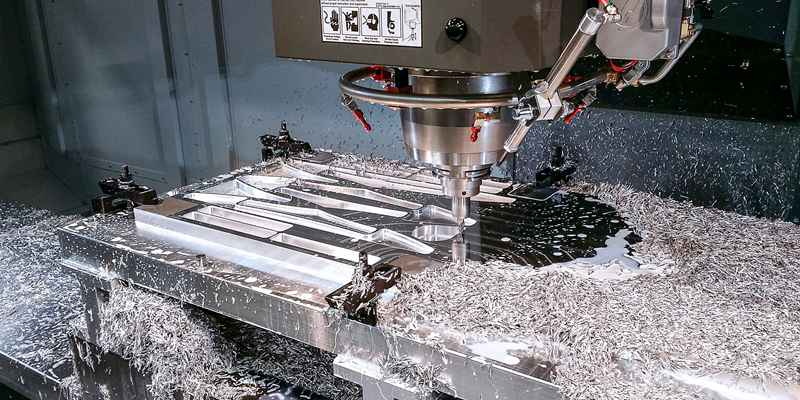
Most CNC machines can handle magnetic materials with proper adjustments. High-end models with sealed spindles and robust coolant systems are most suitable to prevent contamination and ensure consistent performance.
Magnetic chips should be removed immediately using nonmagnetic brushes or compressed air. Allowing them to accumulate might damage surface finishes and reduce tool accuracy due to magnetic drag.
Regularly filter and replace coolants, and use magnetic separators to collect fine ferrous particles. Keeping coolant systems clean extends both machine and tool longevity.
Yes. Magnetic properties can diminish if the metal is heated beyond its Curie temperature, which varies depending on the alloy. Controlled cooling and adequate coolant use help preserve magnetization when required.
Automotive, aerospace, medical, robotics, and energy industries rely heavily on precision-machined magnetic alloys for components such as electric motors, MRI parts, sensors, and high-performance gear assemblies.


