From idea to market-ready product, our NPI solutions make every stage easier, faster. Discover How We Help

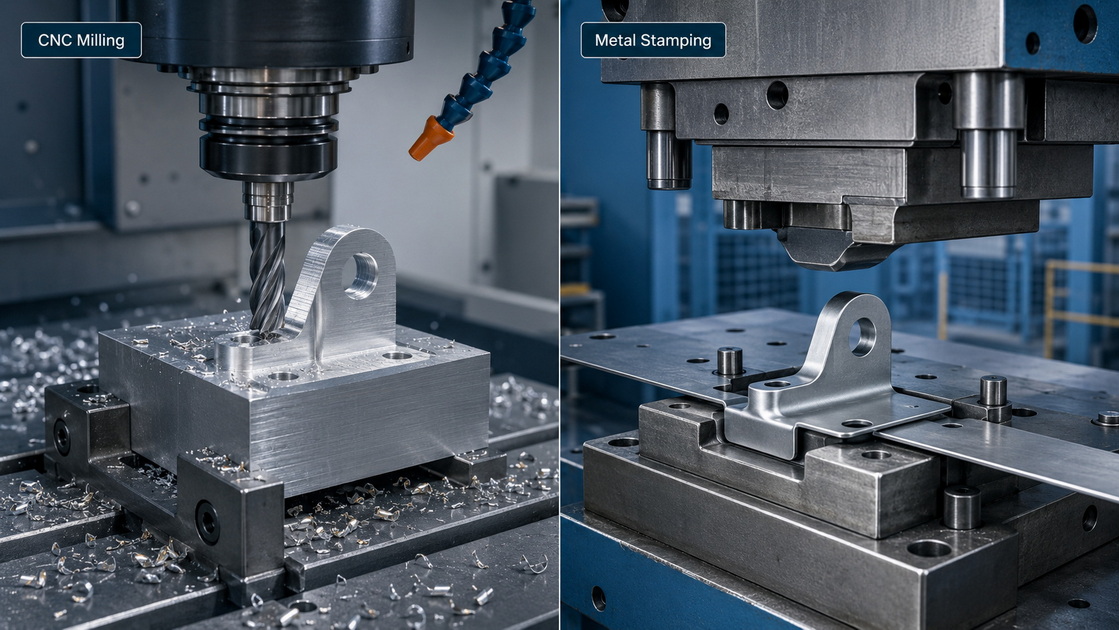
Learn how to choose between CNC milling and metal stamping for small metal brackets. Compare cost, tolerances and volumes, and see how Shenzhen Feifan Hardware & Electronics Co.,Ltd supports OEM/ODM projects from rapid CNC prototypes to high‑volume stamped parts with integrated surface treatment.
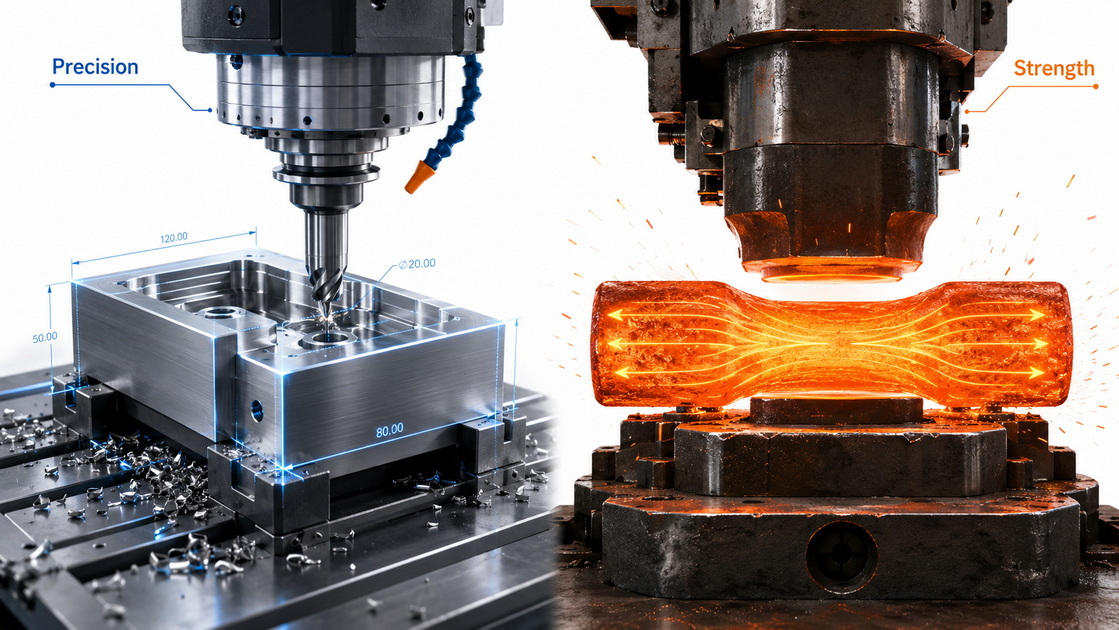
This article explores how CNC milling and forging serve different roles in modern manufacturing, especially for B2B buyers sourcing precision metal components. It explains CNC milling as a highly flexible, computer-controlled process that delivers tight tolerances, complex geometries, and excellent repeatability, making it ideal for prototypes, small-to-medium batches, and parts with critical fit requirements. In contrast, forging is presented as a strength-focused forming process that improves grain flow and fatigue resistance, offering superior durability for load-bearing and safety-critical components. By comparing the two processes in terms of strength, precision, tooling cost, lead time, and design freedom, the article helps engineers and procurement teams quickly identify which route best matches their application. It also highlights a hybrid strategy—combining forging for structural performance with CNC finishing for dimensional accuracy—as a practical solution for OEM and ODM p
Discover how milling and grinding each contribute to achieving sub‑micron tolerances in precision CNC parts. Learn when to use milling, when grinding is essential, and how a combined strategy can optimize performance, cost, and lead time for global OEM and ODM projects.
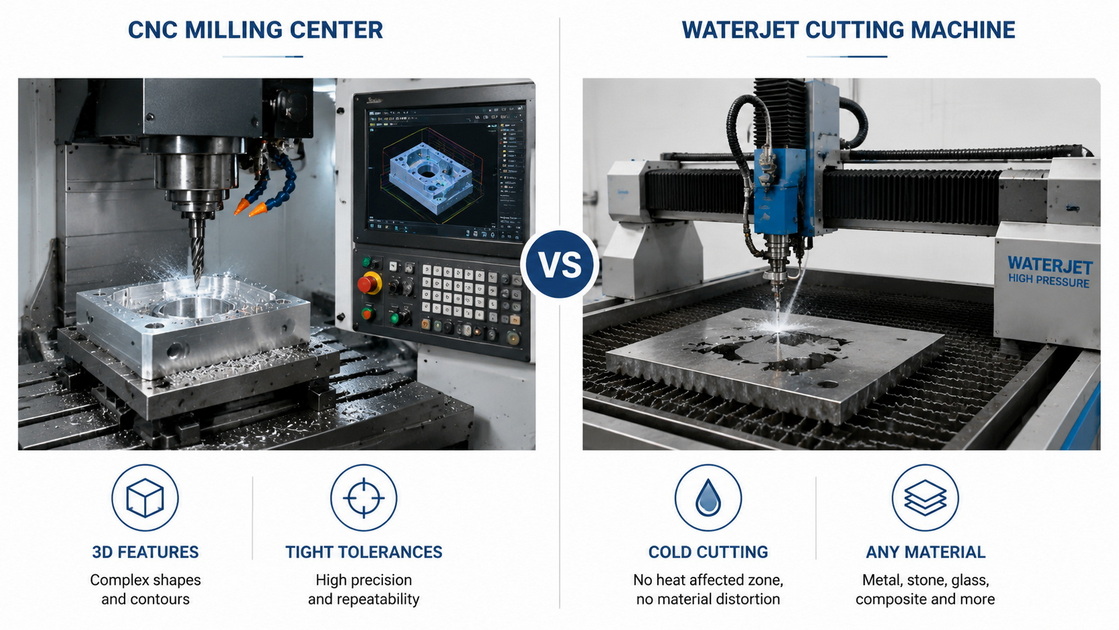
CNC milling and waterjet cutting each offer unique strengths for precision parts. Learn how they differ in accuracy, cost, materials, and heat effects, and see when a hybrid approach delivers the best results for OEM/ODM manufacturing projects.
Plunge milling vs. side milling for deep cavities is a practical manufacturing decision about stability, finish, and chip control. This article compares both methods from an E-E-A-T perspective and shows when each process works best in precision CNC production.
High-speed milling and conventional machining each have distinct strengths in aluminum production. This article compares cost, finish, cycle time, tooling, and OEM suitability from a practical manufacturing perspective.