From idea to market-ready product, our NPI solutions make every stage easier, faster. Discover How We Help

Views: 222 Author: Tomorrow Publish Time: 2025-12-03 Origin: Site


Content Menu
● Factors Influencing Learning Time
● Programming and G-Code Mastery
● Role of Practice and Resources
● Challenges and Overcoming Them
● FAQ
>> 1. What is the fastest way to learn basic CNC operation?
>> 2. How does prior machining experience affect learning time?
>> 3. What role does programming play in overall learning?
>> 4. Are formal courses worth the time investment?
>> 5. How long until independent production of parts?
CNC machining automates precision manufacturing through computer numerical control, directing machines to cut, mill, turn, and drill materials based on digital instructions. This technology powers industries like aerospace, automotive, and medical devices, producing complex parts with tolerances under 0.001 inches. Learning timelines range from weeks for basics to years for expertise, depending on prior skills, practice intensity, and training methods.[3][5][11][12]
Mastery involves understanding machine mechanics, software workflows, and material behaviors, transforming novices into efficient operators. The process starts with CAD design, moves to CAM toolpath generation, and ends with physical execution, each stage building sequential proficiency. Committed learners achieve operational independence faster by focusing on hands-on repetition alongside theory.[1][5][3]
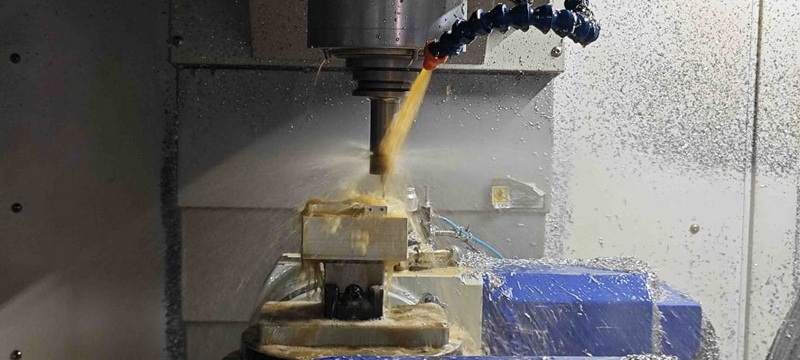
Prior mechanical experience shortens curves dramatically; manual machinists grasp CNC fundamentals in days due to shared principles like feeds, speeds, and tool selection. Beginners without this foundation spend extra time on basics such as geometry, material properties, and cutting physics. Math aptitude, particularly in trigonometry and coordinate systems, accelerates CAM comprehension.[13][14][15][1][3]
Machine types impact speed—3-axis mills suit entry-level learning, while 5-axis systems for contoured parts demand months more. Learning goals matter: operators need less time than programmers handling G-code customization. Daily commitment, ideally 20-40 hours weekly, halves timelines through muscle memory and error correction. Access to resources like simulators or mentors further optimizes progress.[11][12][15][3][13]
Age and learning style influence outcomes; younger adults adapt quickly to software, while methodical thinkers excel in structured environments. Shop culture affects on-the-job trainees, with supportive teams fostering faster growth via real projects. Tracking metrics like setup time or scrap rates quantifies improvement objectively.[14][1][11]
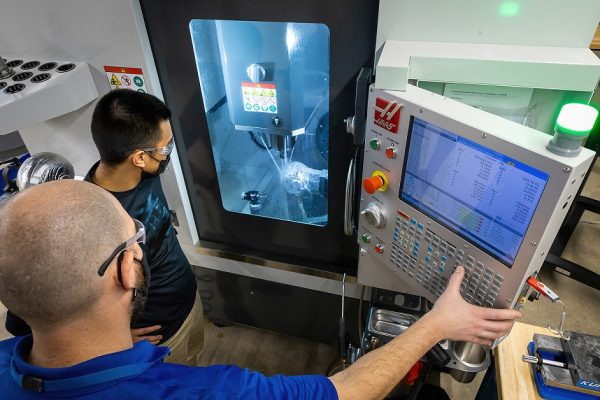
Basic operation—powering up, jogging axes, setting offsets, and running pre-loaded programs—takes 1-3 months for most. Beginners master machine homing, tool changes, and crash avoidance in 2-4 weeks with 20 hours weekly practice. This level enables supervised production of simple parts like brackets or plates.[12][11][13][14]
Hands-on labs emphasize safety protocols, zeroing workpieces, and probing tools accurately to prevent costly errors. Many report solo runs after 40-60 guided hours, focusing on aluminum stock for forgiving cuts. Troubleshooting common issues like spindle alarms builds confidence rapidly. Vocational intros compress this to 8-12 weeks via daily sessions.[2][1][3][14]
G-code programming, using commands like G00 for rapids and M03 for spindle start, requires 3-6 months for competence. Learners study syntax, cycles (G81 drilling), and subprograms for efficiency. Simulators like NC Viewer allow risk-free testing before metal cuts.[15][1][3][11]
CAM software integration, such as Fusion 360 or Mastercam, adds 1-2 months, generating toolpaths from CAD models. Practice sequences: hand-write simple contours, then automate 2D pockets. Apt coders achieve basics in 1 month intensively; others iterate via scrap runs. Understanding offsets (G43 H) and work coordinates (G54-G59) proves pivotal.[5][8][2][13][15]
Advanced proficiency—multi-axis machining, macros, and high-speed strategies—spans 6 months to 2 years. This includes fixturing irregular parts, tolerancing to microns, and optimizing for cycle time. CAD/CAM fluency enables full workflows: modeling in Solidworks, pathing in HSMWorks, and post-processing.[4][1][3][11][12]
Real projects like turbine blades or molds refine intuition for deflections and heat management. Certifications from NIMS or Tooling U-SME validate skills after 500-1000 shop hours. Software updates demand ongoing adaptation, with 5-axis taking 6-12 extra months. Veterans log 1-2 years for lights-out reliability on exotics like titanium.[1][2][5][15]
| Method | Time for Basics | Time for Proficiency | Best For | Key Resources |
|---|---|---|---|---|
| Self-Study (Tutorials/YouTube) | 1-3 months jetcrafted+1 | 6-12 months cncblogs | Flexible hobbyists reddit | Titans of CNC Academy, CNC Cookbook reddit+1 |
| Vocational College | 4-6 months (2 semesters) learn.toolingu | 1-2 years caminstructor | Career starters jetcrafted | Tooling U-SME classes, labs learn.toolingu |
| On-the-Job Training | 1-2 months operation reddit | 1-3 years creatingway | Paid apprentices reddit | Shop manuals, mentors practicalmachinist |
| Intensive Workshops | 4-8 weeks jetcrafted+1 | 6-18 months cncblogs | Upskilling pros learn.toolingu | Haas manuals, simulators reddit |
Self-study risks gaps in metrology but builds autonomy via ncviewer.com practice. Colleges offer Fanuc/Haas specifics and credentials. Job training immerses in production realities like tooling orders. Workshops deliver 24-hour mills via blended instruction.[8][2][3][4][1]
Deliberate practice trumps volume; 10 hours weekly on escalating complexity outperforms sporadic marathons. Desktop CNCs under $1000 enable home feeds/speeds trials on plywood before aluminum. Free tools: Machinery's Handbook for formulas, Fusion 360 trials for CAM.[3][5][13][1]
Communities like r/CNC and Practical Machinist provide offset troubleshooting and macro shares. Track progress with part timers: aim for 30-minute simple jobs post-month one. Blend manual machining intros for physical intuition before CNC leaps.[8][11][13][1]
Software overwhelm hits early; counter with 2D profiles before 3D roughing. Feeds/speeds miscalculations cause breaks—use calculators and start conservative. Geometry struggles yield to AutoCAD 2D drills for coordinate thinking.[14][1][3]
Crash anxiety fades after 10-20 supervised runs; log errors for patterns. Time blocks prevent burnout: 1-hour daily coding plus weekend machining. Mentors via forums resolve fixturing puzzles faster than solo trials. Resilience grows from chip-making failures, turning months of frustration into expertise.[12][13][15][8]
CNC operators earn entry wages after basics, scaling to $30+/hour as programmers. Demand surges for EV/medical precision, with 1-year vets handling $50k projects. Certifications boost resumes, aligning 6-month training with shop needs.[16][2][11][15][14]
Global factories seek versatile skills amid automation; macros unlock supervisory roles. Lifelong tweaks for Industry 4.0 ensure longevity. Profiles like Titans of CNC inspire paths from hobby to pro.[1][3][12]
CNC machining learning progresses from 1-3 months basics to 1-2+ years mastery, driven by practice, methods, and foundational grasp. Structured paths with simulators, CAD/CAM, and real cuts yield pros fastest. This skillset promises stable, high-reward manufacturing careers.[3][12]
Daily simulator practice plus 20-hour weeks achieve offsets and runs in 2-4 weeks; workshops hit this in days.[4][11]
Manual backgrounds cut basics to 1-2 weeks via tool/material familiarity; novices triple that.[13][1]
G-code/CAM adds 3-6 months, enabling custom efficiency beyond canned cycles.[5][15]
Yes, 4-12 months yield certs, controls training, and labs outperforming solo efforts.[2][16]
Simple unsupervised in 1-2 months; complex via projects in 6-12.[12][13]
[1](https://www.reddit.com/r/machining/comments/ea8dtq/how_can_i_begin_studying_and_training_to_enter/)
[2](https://learn.toolingu.com/blog-start/2023/june/cnc-machining-training-guide/)
[3](https://www.cnccookbook.com/learn-cnc-basics-tutorial/)
[4](https://academy.titansofcnc.com/files/Fundamentals_of_CNC_Machining.pdf)
[5](https://www.autodesk.com/products/fusion-360/blog/cnc-machining-101-a-comprehensive-guide/)
[6](https://gab.wallawalla.edu/~ralph.stirling/classes/engr480/examples/nvx/NVX/Helpful%20Docs/CNC_Machining_The_Complete_Engineering_Guide.pdf)
[7](https://www.cncyangsen.com/a-comprehensive-guide-to-cnc-machine-basic-knowledge)
[8](https://www.practicalmachinist.com/forum/threads/cnc-the-proper-progression.275203/)
[9](https://www.fictiv.com/articles/the-ultimate-guide-to-cnc-machining)
[10](https://firstpart.com/ultimate_guide_to_learn_cnc_machining_with_simplest_terms/)
[11](https://cncblogs.com/cnc-industry-blog/how-long-does-it-take-to-learn-a-cnc-machine/)
[12](https://www.creatingway.com/how-long-does-it-take-to-learn-cnc-machining/)
[13](https://www.reddit.com/r/CNC/comments/1nbazwk/how_long_to_learn_basic_cnc/)
[14](https://www.reddit.com/r/CNC/comments/1gs51jn/how_long_does_it_take_to_learn_cnc_basics/)
[15](https://jetcrafted.com/how-long-does-it-take-to-learn-cnc-programming/)
[16](https://caminstructor.com/certification)


