From idea to market-ready product, our NPI solutions make every stage easier, faster. Discover How We Help

Views: 222 Author: Tomorrow Publish Time: 2025-11-18 Origin: Site


Content Menu
● CNC Milling: Process and Capabilities
● Key characteristics of milling:
● CNC Turning: Process and Capabilities
● Key characteristics of turning:
● Expanded Considerations in Milling and Turning
● Hybrid and Multi-Tasking Solutions
● Common Part Types by Process
● Process Selection Guidelines
● Economic and Strategic Considerations
● Practical Examples and Case Studies
● FAQ
>> 1. What is the main difference between CNC milling and CNC turning?
>> 2. Which process is better for complex non-axis-aligned features?
>> 3. Can a single machine perform both milling and turning?
>> 4. How do tolerances compare between milling and turning?
>> 5. What factors influence the choice between milling and turning?
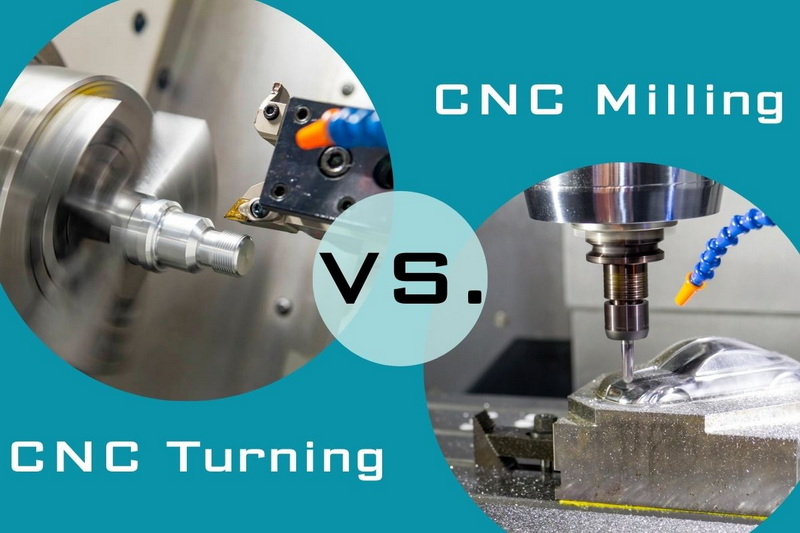
CNC milling and CNC turning are two core subtractive manufacturing processes used to shape metal, plastic, and other materials with high precision. While both rely on computer numerical control (CNC) to automate movement and tooling, they differ in the way material is removed and the kinds of parts they are best suited to produce. Understanding the distinctions helps engineers choose the right process for a given part, optimize manufacturing efficiency, and control costs.

CNC milling uses rotating cutting tools to remove material from a workpiece mounted on a multi-axis machine table. The typical setup involves clamping the workpiece and using a rotating cutter to remove material from multiple faces and features. The spindle speeds and feed rates are programmed to achieve the desired surface finishes and tolerances.
- Tooling: A variety of end mills, ball mills, and slot drills are used to create pockets, contours, slots, holes, and complex 3D geometries.
- Axes: Modern CNC mills can operate on 3, 4, or 5 axes, enabling intricate features such as deep cavities, inclined holes, and undercuts.
- Part geometry: Ideal for parts with multiple surfaces, complex profiles, pockets, channels, and features that require simultaneous movement along multiple axes.
- Surface finishes: Milling can achieve smooth surfaces with proper tooling, speeds, and feeds, as well as precise pocketing and contouring.
- Material compatibility: Suitable for a wide range of materials, from aluminum and steel to plastics and composites.
- Tolerance and accuracy: High, with tight tolerances achievable on flat, parallel, and perpendicular features; advanced mills enable complex geometries with consistent accuracy.
CNC turning primarily removes material from the outer diameter of a rotating workpiece held in a chuck or collet. A stationary or rotating tailstock supports the part, while stationary tools or live tooling cut material in a radial manner. The spindle drives the rotation, and cutting tools approach the workpiece to produce cylindrical features, threads, grooves, and shoulders.
- Tooling: Cutting tools are used in a stationary or rotating configuration to shape cylindrical surfaces, with options for facing, grooving, threading, boring, and parting off.
- Axes: Traditional turning is a 2-axis process (X and Z in many lathes), though modern turning centers integrate live tooling and secondary axes to perform mill-like operations.
- Part geometry: Best for round, cylindrical, or symmetrical components such as shafts, bushings, bushings, spacers, and sleeves.
- Surface finishes: Turned surfaces can be highly concentric and smooth, particularly along the rotational axis, with finishes dependent on tool condition and feed/speed.
- Material compatibility: Suitable for metals (steel, aluminum, brass, titanium) and certain polymers; high-strength materials may require advanced tooling and coolants.
- Tolerance and accuracy: Excellent for cylindrical tolerances; complex geometries are achievable with secondary operations or live tooling.
- Tool geometry and wear: End mills and cutters wear differently depending on the material and cutting conditions. Advanced tool materials such as carbide and coatings (TiN, TiAlN) extend tool life, reduce heat buildup, and improve surface finish.
- Chip control and evacuation: Effective chip management prevents recutting chips, which can mar surfaces and degrade tolerances. Flood cooling, mist, or high-pressure coolant can be selected based on material and geometry.
- Thermal effects: Heat generation can cause workpiece expansion and tool wear, influencing tolerances. Thermal compensation strategies and intermittent cutting cycles help maintain accuracy.
- Surface integrity: Beyond roughness, factors such as residual stress, micro-cracking, and workpiece hardness affect long-term performance. Process parameters are often tuned to optimize surface integrity for the intended service environment.
- Fixturing and workholding: For milling, vises, modular fixturing, and vacuum chucks secure irregular geometries. For turning, chucks, collets, and steady rests hold cylindrical parts with high precision.
- Mill-turn centers combine milling and turning in one machine, enabling complex parts with both rotational and non-rotational features to be produced in a single setup. This reduces handling, improves tolerances, and shortens lead times.
- Rotary axes and live tooling expand capabilities, allowing drilling, tapping, and milling operations to occur on a rotating part without re-clamping.
- Process planning often includes both milling and turning steps, either on separate machines or within a single integrated workflow, to optimize cycle times and achieve desired features.
- Milling-dominated parts: Complex envelopes, pockets, slots, gear cutouts, engraved features, and parts with multiple faces.
- Turning-dominated parts: Cylindrical shafts, bushings, sleeves, threaded studs, parametric production runs requiring precise diameters and concentric features.
- Hybrid parts: Components with both external cylindrical geometry and complex pockets or features, such as connectors or housings, often produced on mill-turn or multi-tasking centers.
- Metals: Aluminum alloys are popular for both milling and turning due to machinability and weight. Steel and stainless steel require robust tooling and cooling, particularly for high-speed operations. Titanium, nickel alloys, and superalloys demand advanced tooling strategies and chip control.
- Plastics: Engineering plastics are commonly milled and turned for fixtures, housings, and prototypes; thermal considerations and tool wear are essential for consistent results.
- Composites: Carbon-fiber-reinforced polymers and other composites pose challenges such as tool wear and delamination risks, necessitating specialized tooling and process planning.
- If the part features multiple non-parallel surfaces, pockets, or complex contours, milling is typically preferred.
- If the part is predominantly cylindrical with tight concentric tolerances, turning is usually the better choice.
- For parts with a combination of features, consider mill-turn or multi-tasking centers to minimize handling and improve accuracy.
- Consider production volume and cost per part: high-volume cylindrical components may favor turning, while small-batch or prototype parts with complex geometry may benefit from milling.
- Tolerancing: Define critical dimensions, including diameters, flatness, perpendicularity, and concentricity, and ensure tooling and machine calibration support these tolerances.
- Surface finish: Specify finish requirements (e.g., Ra), and select appropriate tooling, feeds, speeds, and coolant strategies to meet them.
- Tool management: Track tool wear and replacement schedules to sustain precision; use appropriate tool materials for the workpiece material.
- Coolant and chip evacuation: Use coolant to reduce heat buildup and extend tool life; ensure efficient chip removal to prevent damage and maintain surface integrity.
- Measurement: Post-process inspection with coordinate measuring machines (CMM) or other metrology tools verifies dimensions and tolerances against the design intent.
- Lead times: Milling setups can be quicker for simple parts; complex geometries may require longer programming and setup times.
- Tooling costs: Milling often uses a broader range of cutting tools, which may affect tool inventory costs.
- Surface finishing: Some surfaces may require secondary finishing operations; plan for secondary operations if necessary.
- Supplier capabilities: Choose a shop with experience in the material and geometry required, and with the ability to maintain tight tolerances across critical features.
- Aerospace brackets: These often involve a combination of complex pockets and precise cylindrical holes. A mill-turn solution can produce the entire bracket in one setup, ensuring tight tolerances and reducing assembly risk.
- Automotive shafts: Pure turning operations can deliver extremely uniform diameters and concentricity for shafts, while milling features such as keyways or slots might be added in a secondary operation or on a mill-turn platform.
- Medical devices: Precision stainless steel components with intricate internal channels may require high-precision milling with tight surface finishes and stringent cleanliness standards; choosing the right coolant and tool coatings becomes critical.
- Underestimating setup time: Complex parts often need extensive fixturing preparation and programming. Allocate adequate lead time in project planning.
- Overlooking secondary operations: Finishing passes, deburring, and quality checks can add significant time and cost if not planned from the start.
- Neglecting tool wear: Failing to monitor tool life can lead to degraded tolerances and increased scrap rates.
- Ignoring material behavior: Some materials work-harden or seize cutting tools; selecting appropriate speeds, feeds, and lubrication mitigates these issues.
- Simulation and CAM planning: Use computer-aided manufacturing (CAM) simulations to detect collisions and optimize toolpaths before cutting.
- Standardization: Develop standardized tooling packages for common features to reduce changeover time and maintain consistency.
- Measurement-driven iteration: Implement inline or post-process metrology feedback to adjust processes quickly and improve yields.
- Material-specific strategies: Tailor feeds, speeds, and cooling methods to each material's properties to maximize tool life and surface finish.
CNC milling and CNC turning are complementary processes that serve different geometric needs. Milling excels at complex, multi-face geometries with diverse features, while turning specializes in precise cylindrical surfaces with high concentricity. When selecting between milling and turning, consider part geometry, required tolerances, production volume, and overall manufacturing efficiency. For parts combining rotational and non-rotational features, mill-turn or multi-tasking solutions can deliver optimized results by reducing handling steps and improving accuracy. Thoughtful planning, appropriate tooling, and rigorous quality control enable manufacturers to choose the right process and achieve consistent, repeatable results across a wide range of applications.
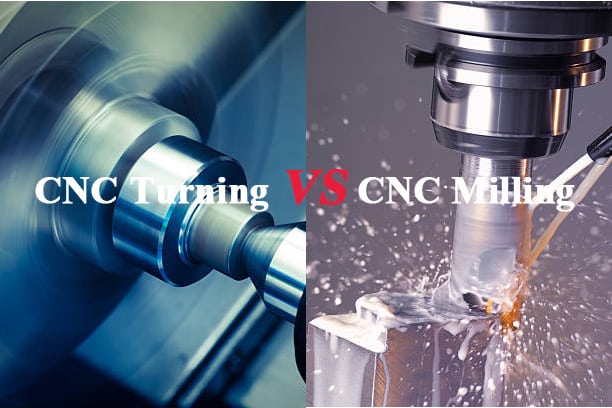
CNC milling removes material with rotating cutters to shape multi-faced features, while CNC turning shapes cylindrical surfaces by rotating the workpiece against cutting tools.
Milling is generally better for complex, non-axis-aligned features because it can access multiple faces and angles in a single setup.
Yes, mill-turn centers combine milling and turning capabilities, enabling simultaneous operations on a single machine.
Both can achieve tight tolerances, but tolerances often depend on feature type; turning excels at cylindrical tolerances, while milling handles flatness and perpendicularity well.
Part geometry, desired tolerances, production volume, lead time, tooling costs, and whether hybrid features exist are the main drivers.


